
Daniel Flefil
January 26, 2019 · 9 min read
A proper warmup before freestyle training is not optional. The swings, catches, and rotations that make up street workout place sudden and high loads on the shoulder joints, elbows, and wrists, and doing those movements cold significantly raises your injury risk. I have trained with experienced athletes who skip warmup and end up spending weeks or months recovering from injuries that could have been prevented. In this guide I walk through the complete warmup routine I use before freestyle sessions, covering every body area from neck to full-body activation with the exact rep counts and durations from the video. By the end, you will have a routine you can follow directly before every freestyle workout.
Watch the Full Tutorial
Why Warmup Matters for Freestyle Training
Freestyle training stresses joints and connective tissue in ways that standard strength training does not. A swing 360, a muscle-up, or any release move involves your hands leaving and re-catching the bar under momentum. That kind of load hits the wrists, elbows, and shoulder joints hard. Cold joints and unprepared connective tissue are where injuries happen.
The warmup serves three purposes. First, it gets blood flowing through the muscles and into the joints and ligaments. Second, it takes your joints through their full range of motion before any dynamic load is added, which also builds mobility gradually over time. Third, it puts you in the right mental state for training, shifting focus away from everything else and onto the session ahead.
The areas that matter most for freestyle are the shoulder joints, elbows, wrists, neck, back, and core. Legs matter less in pure freestyle, but hip mobility helps with form on tricks involving leg positioning.
The Complete Warmup Routine
Work through each section in order. Do not skip sections or swap the order, the sequence moves from smaller joints to larger ones and from lower to higher intensity.
Section 1: Neck
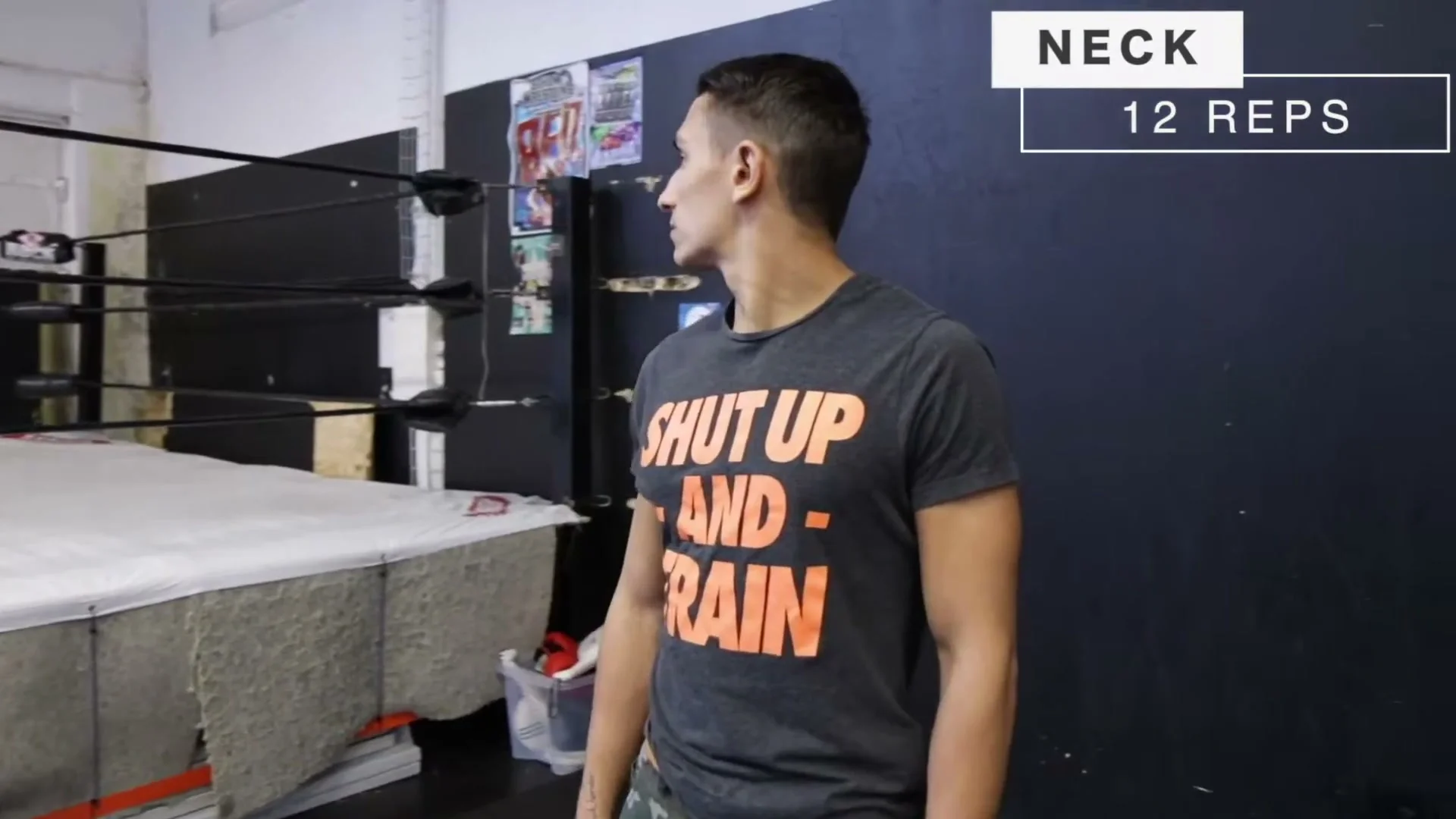
Start with neck tilts and rotations. Move your head slowly side to side and front to back, then make controlled circles in each direction. The neck does not handle load in most freestyle skills directly, but its stiffness affects shoulder movement patterns. Loosening it first sets up better shoulder mobility in the sections that follow.
Reps: 12 reps per movement.
Section 2: Shoulders
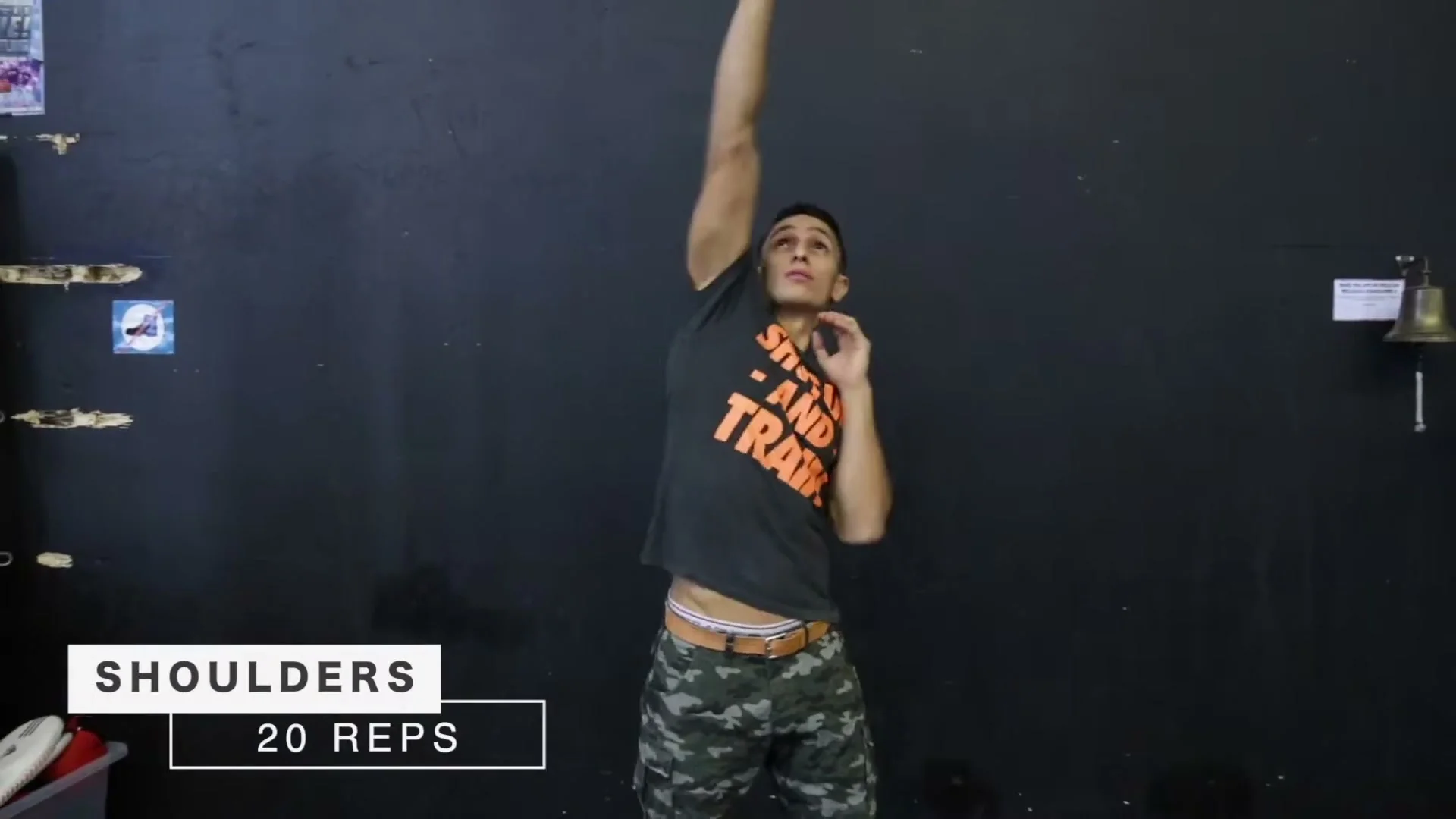
Shoulders are the most important section in this warmup. Give them more time and more exercises than any other area.
Big arm swings: 20 reps. Swing both arms in large forward circles, then reverse direction. Use your full range of motion. The goal is to feel the joint loosen progressively across the reps.
Single arm circles: 10 reps per arm. One arm at a time, swing in a full circle forward and then backward. Single arm circles isolate each shoulder independently and catch asymmetry early.
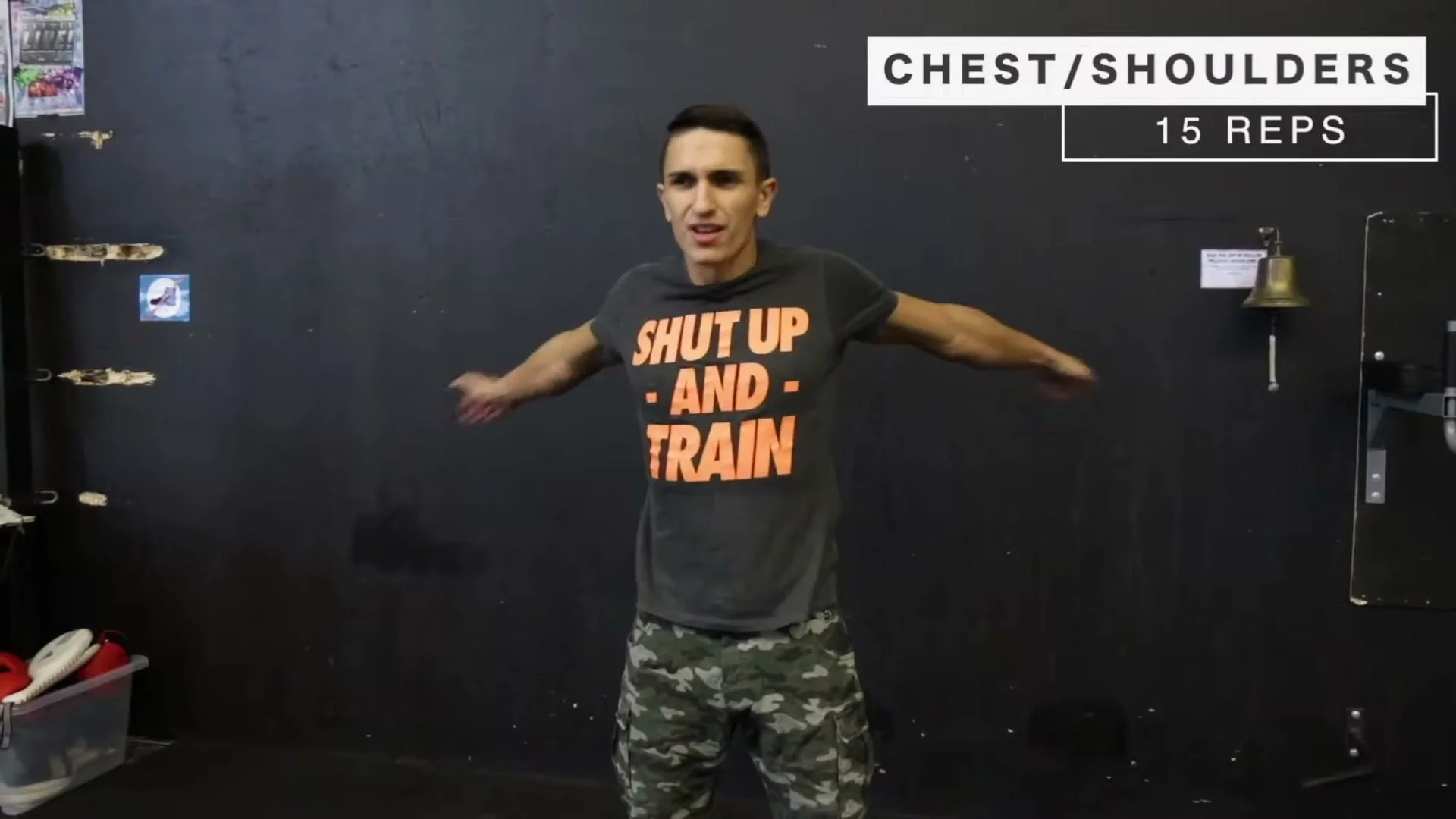
Chest openers: 15 reps. Hold your arms out to your sides and open your chest, pulling the arms slightly back with each rep. This mobilizes the anterior shoulder capsule and stretches the chest.
Arm swings across body: 10 reps. Swing both arms from extended at your sides to crossed in front of the chest repeatedly, alternating which arm crosses over the top. Loosens the posterior shoulder and thoracic spine.
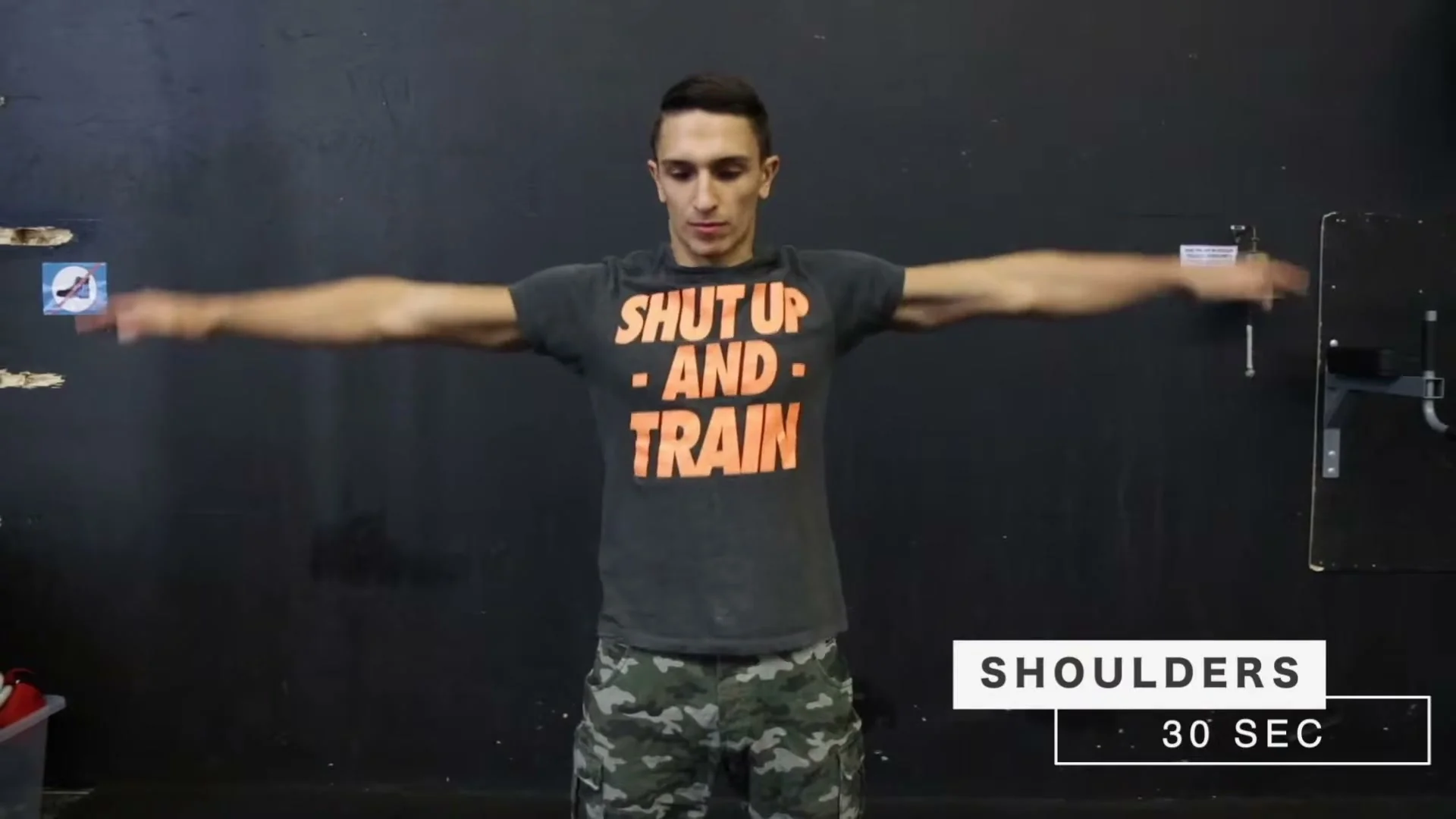
Shoulder static hold with rotation: 30 seconds. Hold your arms extended at shoulder height to each side and make small controlled rotations or pulses. This activates the rotator cuff muscles, which stabilize the joint during catches and swings.
Key Takeaway
Section 3: Elbows

Elbow circles and rotations warm up the elbow joint and the tendons around it. Bring each elbow to 90 degrees and circle the forearm in both directions, then extend and flex the elbow through full range.
Reps: 15 reps per side.
Elbow injuries in freestyle often come from catching the bar at a locked-out angle under speed. This section prepares the joint for that kind of impact.
Section 4: Wrists and Forearms
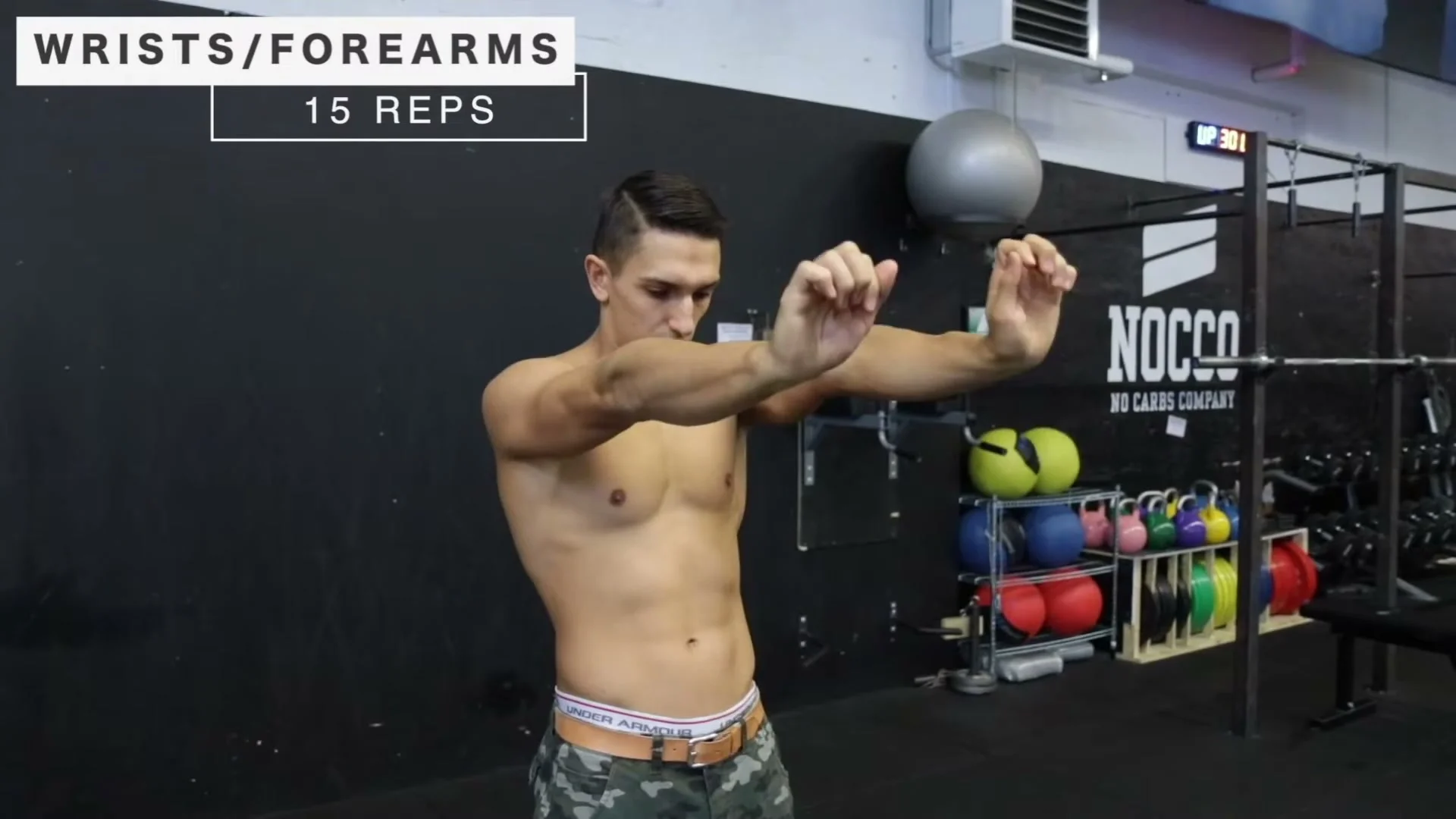
Start with wrist circles and forearm rotations while standing. Clasp your hands or keep them open and rotate through the full wrist range of motion in both directions.
Reps: 15 reps.
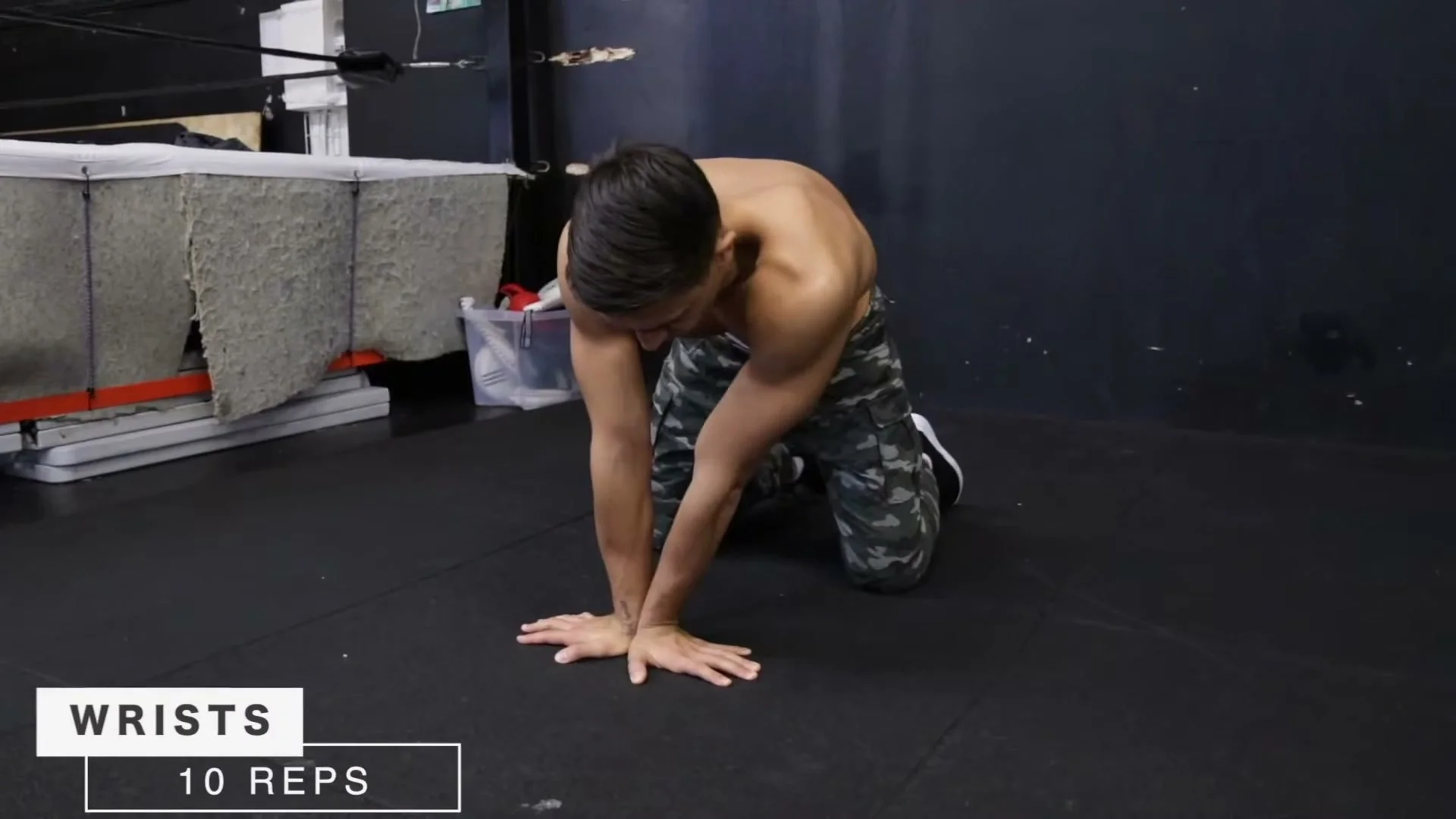
Then move to the floor version. Get on your knees with your hands flat on the ground, fingers pointing forward. Slowly rock forward to load the wrists under your bodyweight, then back. This is one of the most underrated wrist exercises for freestyle athletes.
Reps: 10 reps, controlled.
Wrists take repeated impact during every bar grab. This section is short but important for long-term joint health.
Section 5: Hips and Legs
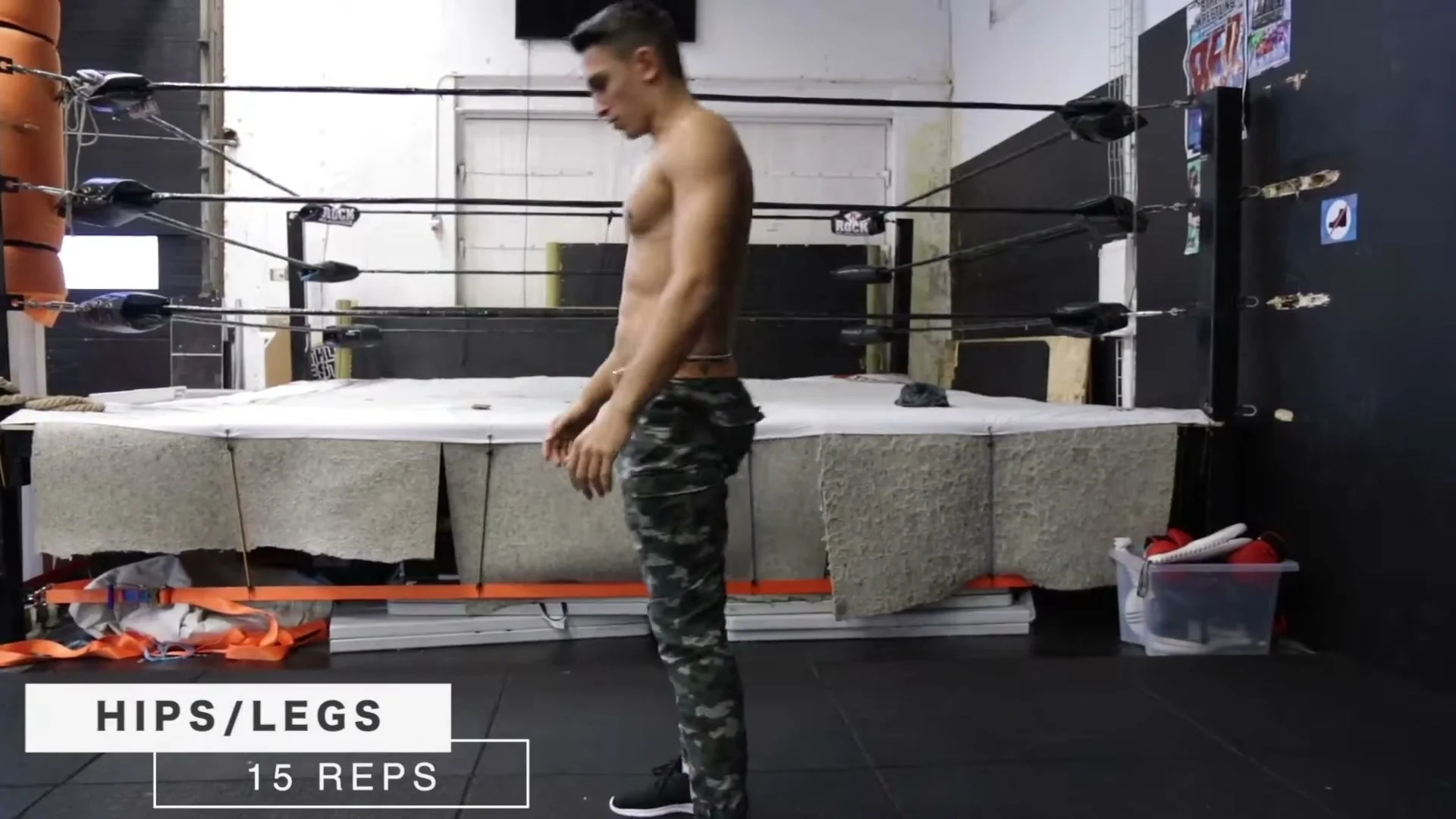
Hip circles mobilize the hip joint and glutes. Stand with feet shoulder-width apart and make large controlled circles with your hips. Then move to leg swings: support yourself lightly with one hand on the bar or wall and swing each leg forward and back through a full range.
Hip circles: 15 reps. Leg swings: 10 reps per leg.
Freestyle does not involve legs as much as upper body, but hip mobility affects your body line during holds and rotations. Stiff hips also contribute to lower back tightness, which can affect bar positioning.
Section 6: Full Body Activation
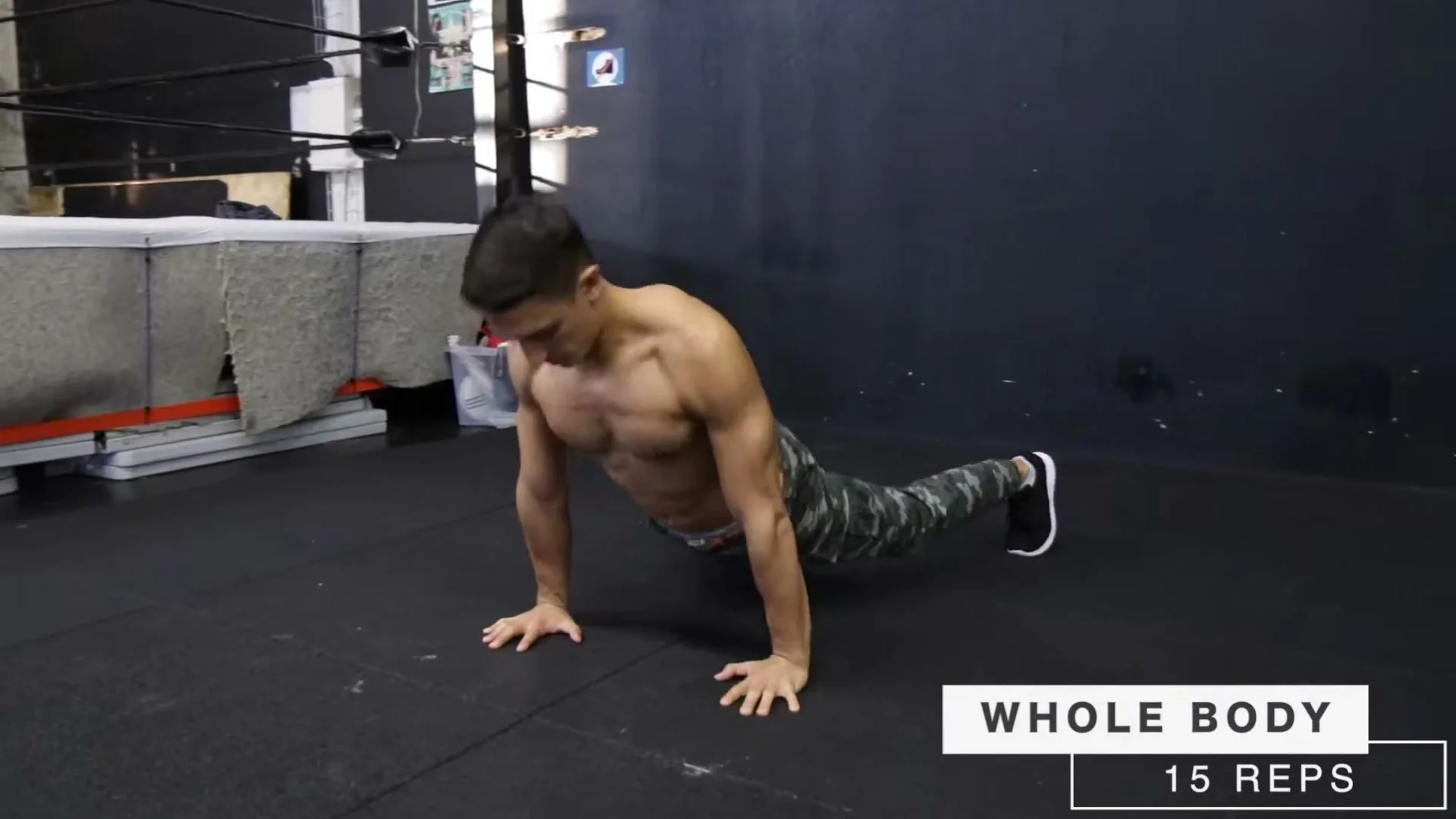
The full body section brings everything together with dynamic movements from a push-up or plank position. Mountain climbers or slow push-up variations work here. The goal is to elevate heart rate and get the entire body generating heat before any bar work begins.
Reps: 15 reps.
Section 7: Band Shoulder Activation
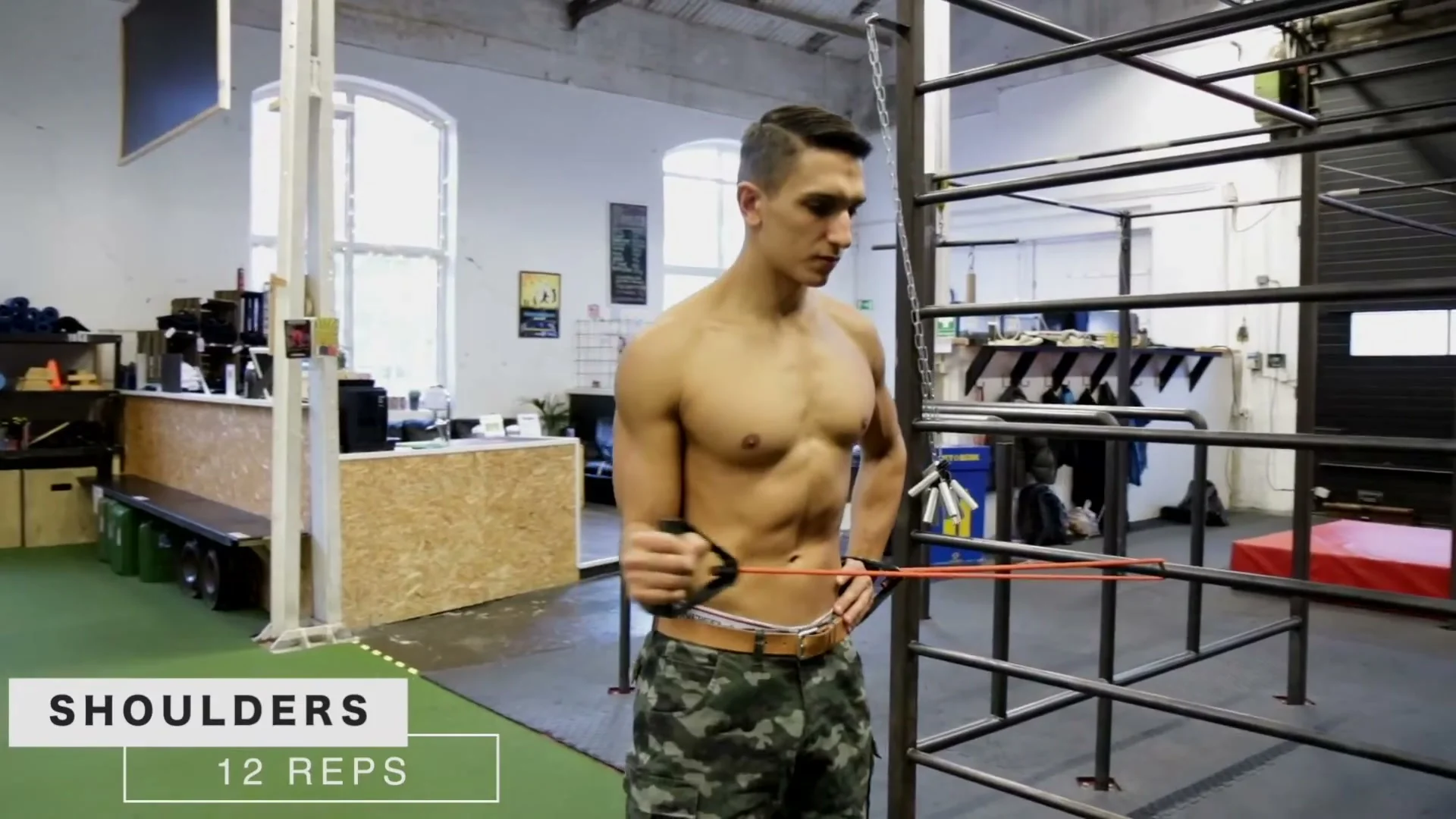
Using a light resistance band adds targeted rotator cuff activation that body weight movements alone do not provide. Anchor or hold the band at shoulder height and perform pull-aparts or internal and external rotation movements. Go through the movement slowly and deliberately.
Reps: 12 reps standard, then 10 reps per direction for rotation variations.
If you do not have a band, substitute additional slow shoulder circles or scapular retraction drills.
Section 8: Bar and Push-Up Activation
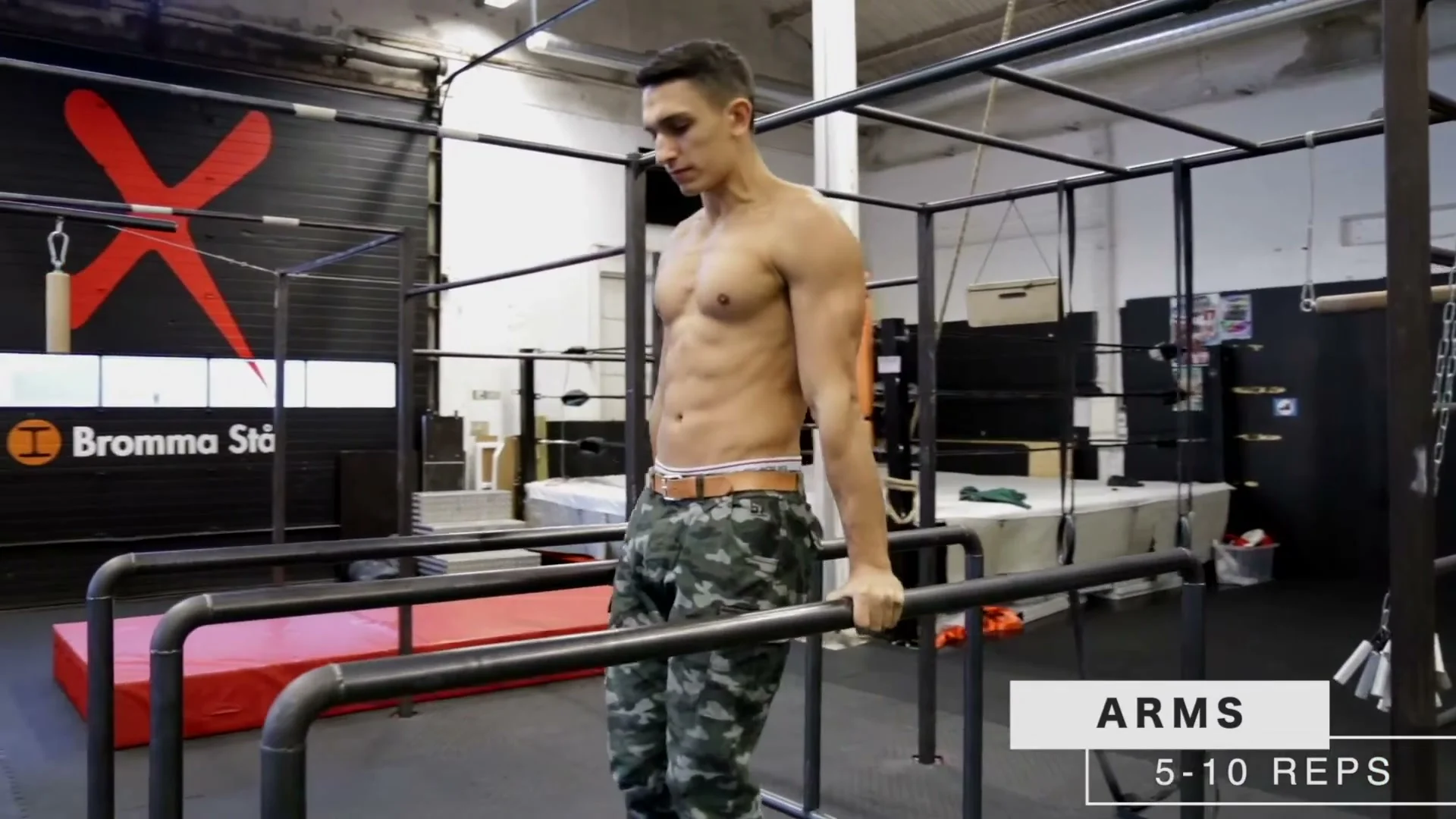
Get on the bar or parallel bars for light activation reps. Slow dips or straight-arm scapular depressions prepare the shoulder joint for the specific forces it will handle during training.
Reps: 5 to 10 reps, slow and controlled.
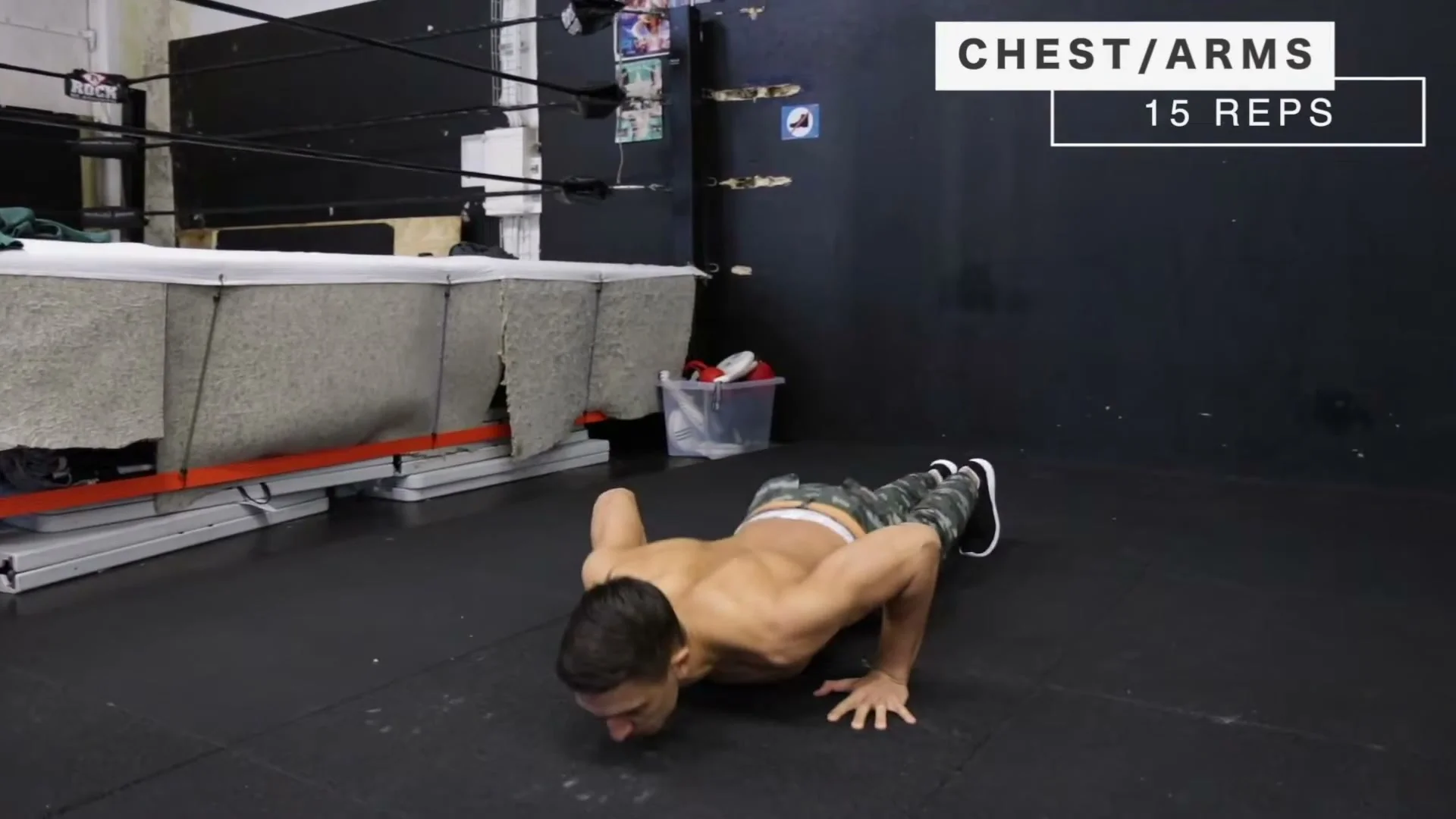
Follow with 15 push-ups. These bring heat into the chest, triceps, and anterior shoulder before adding any dynamic bar load.
Section 9: Final Stretch
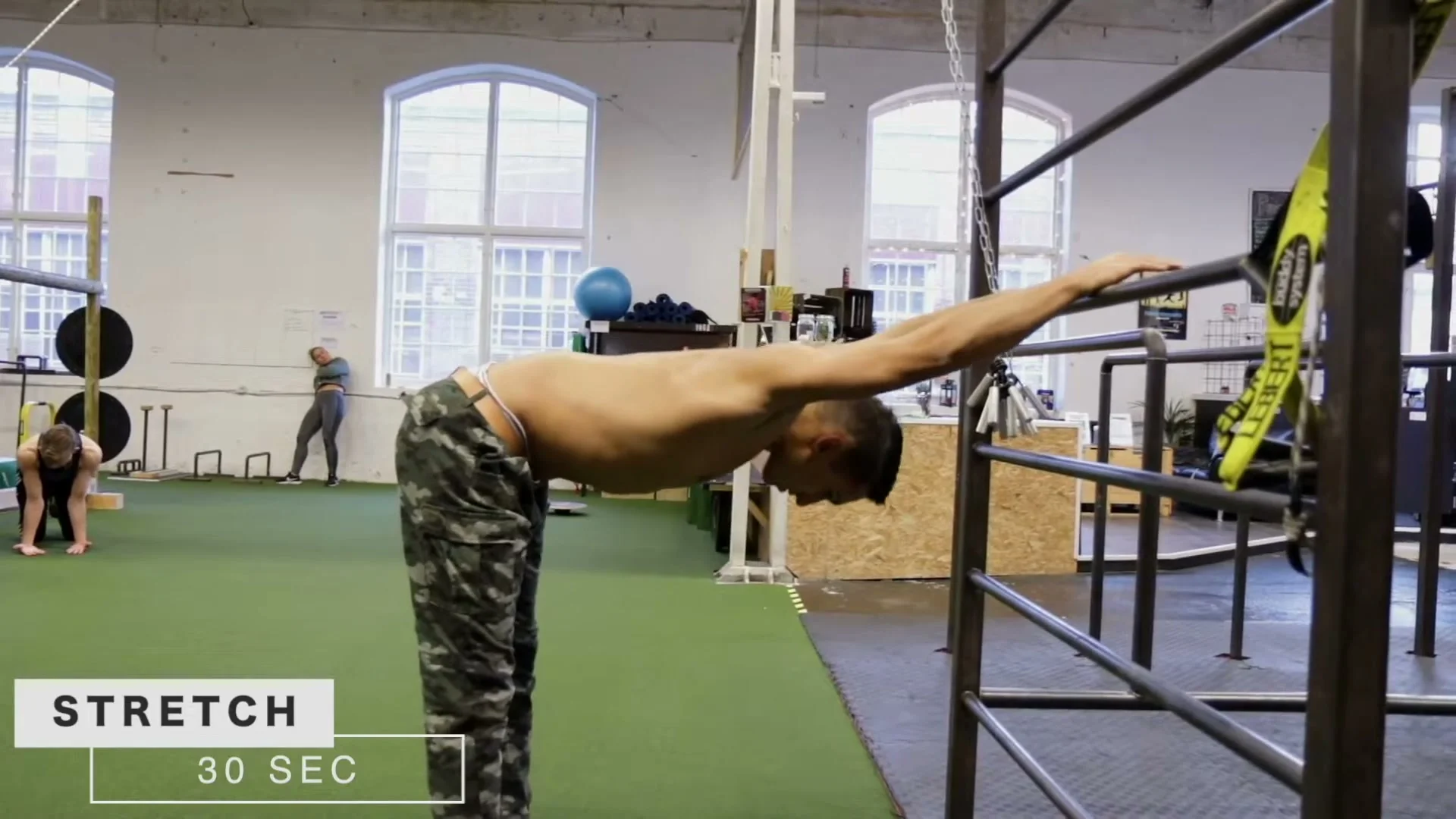
Finish with a lat and posterior shoulder stretch. Grab a low bar or surface at about hip height, step back, and fold forward until your arms are fully extended and your chest drops toward the ground. Hold for 30 seconds. This lengthens the lats after the activation work and opens the posterior shoulder capsule.
Hold: 30 seconds.
Common Mistakes
Warming Up for Too Little Time
Five or ten minutes is not enough before freestyle training. The joint surfaces in the shoulder, elbow, and wrist need adequate time to warm up and produce synovial fluid. Rushing through the routine defeats its purpose. Work through each section properly, even if it means shortening the training session.
Skipping the Wrist Section
Wrists are the most commonly injured joint in freestyle training and also the most skipped in warmups. The floor loading drill is one of the best preventative exercises for wrist health in bar athletes. Include it every session without exception.
Only Warming Up With Big Movements
Big arm swings feel productive, but the smaller muscles around the shoulder joint, including the rotator cuff, require specific activation. The band work and static hold sections target these muscles. Skipping them leaves the joint stabilizers unprepared even if the larger muscles feel warm.
Using the Same Warmup for Every Session
A light skill session and a heavy new trick session need different warmup lengths. Match the warmup intensity and duration to what is coming after it. A session focused on learning a new dynamic release move deserves a longer, more thorough warmup than a day focused on basic holds.
Training Tips
This routine works best done in order from top to bottom. The sequence moves from smaller joints to larger ones and from lower to higher intensity, which gives each area time to warm up before the more demanding sections that follow.
If you are short on time, prioritize the shoulder, elbow, and wrist sections over legs and full body. The upper body takes the majority of stress in freestyle and is where injury risk is highest.
Track whether your joints feel noticeably warmer and more mobile by the end of each warmup. If they do not, you are either moving too fast or skipping sections. The warmup should produce a light sweat and elevated heart rate before you start your first skill.
Use the resistance band section as a diagnostic tool as well. If one shoulder feels significantly tighter than the other during band work, spend extra time on that side before loading it with bar skills.
Keep this warmup consistent across sessions. The mobility gains from regularly moving through full joint ranges compound over weeks and months. Athletes who follow a structured warmup consistently develop better shoulder and wrist range of motion than those who train hard but warm up casually.
Frequently Asked Questions About the Calisthenics Freestyle Warmup
How long should a freestyle warmup take?
For a full freestyle training session, 20 to 40 minutes is appropriate. This is longer than most warmups, but freestyle places unusual dynamic loads on joints that require more preparation time than standard strength training. If training time is limited, prioritize the shoulder, elbow, and wrist sections and shorten the leg section.
Do I need a resistance band to warm up for freestyle?
No, but it helps. The band exercises target the rotator cuff muscles more specifically than free movements alone. Without a band, substitute additional slow shoulder circles, scapular retraction drills, or controlled shoulder mobility exercises. A light band costs very little and is worth having in your training bag.
Should I warm up before outdoor bar sessions too?
Yes, always. The location does not change the demand on your joints. Outdoor bars often mean colder temperatures, which makes proper warmup even more important because cold muscles and connective tissue are less pliable and more prone to injury.
Can this warmup routine help prevent wrist injuries from bar training?
Yes. The wrist circle and floor loading exercises in this routine directly prepare the wrists for the impact and load of bar training. Consistent wrist warmup over months also builds strength and resilience in the tendons around the wrist joint. Many common wrist injuries in bar training are connected to insufficient warmup and progressive loading.
Is this warmup suitable for strength calisthenics, not just freestyle?
Yes. The shoulder, elbow, and wrist sections apply to any bar-based training. Athletes training pull-ups, muscle-ups, planche, or front lever will benefit from the same joint preparation. Adapt the order if needed, but the exercises translate well to any calisthenics discipline.
What happens if I skip the warmup and start training directly?
Short term, training without warmup often feels fine, especially on younger athletes or warm days. Long term, consistently skipping warmup accumulates wear on unprepared joints and connective tissue. Most serious training injuries happen after repeated sub-maximal stress, not a single dramatic effort. Warmup is the most cost-effective injury prevention available.
Do I warm up differently for a competition or performance day?
The base routine stays the same, but extend the shoulder sections and add more dynamic rehearsal movements that mirror what you will perform. On performance days, more repetitions of the full warmup routine over a longer period helps the nervous system reach the coordination level needed for peak execution.
Daniel Flefil
Calisthenics coach with 11 years of experience, co-founder of Calixpert, and organizer of Beast of the Barz, one of the world's largest calisthenics competitions. Based in Stockholm. I write about training, equipment, and everything that goes into building a serious calisthenics practice.
More about Daniel →