
Daniel Flefil
February 2, 2019 · 6 min read
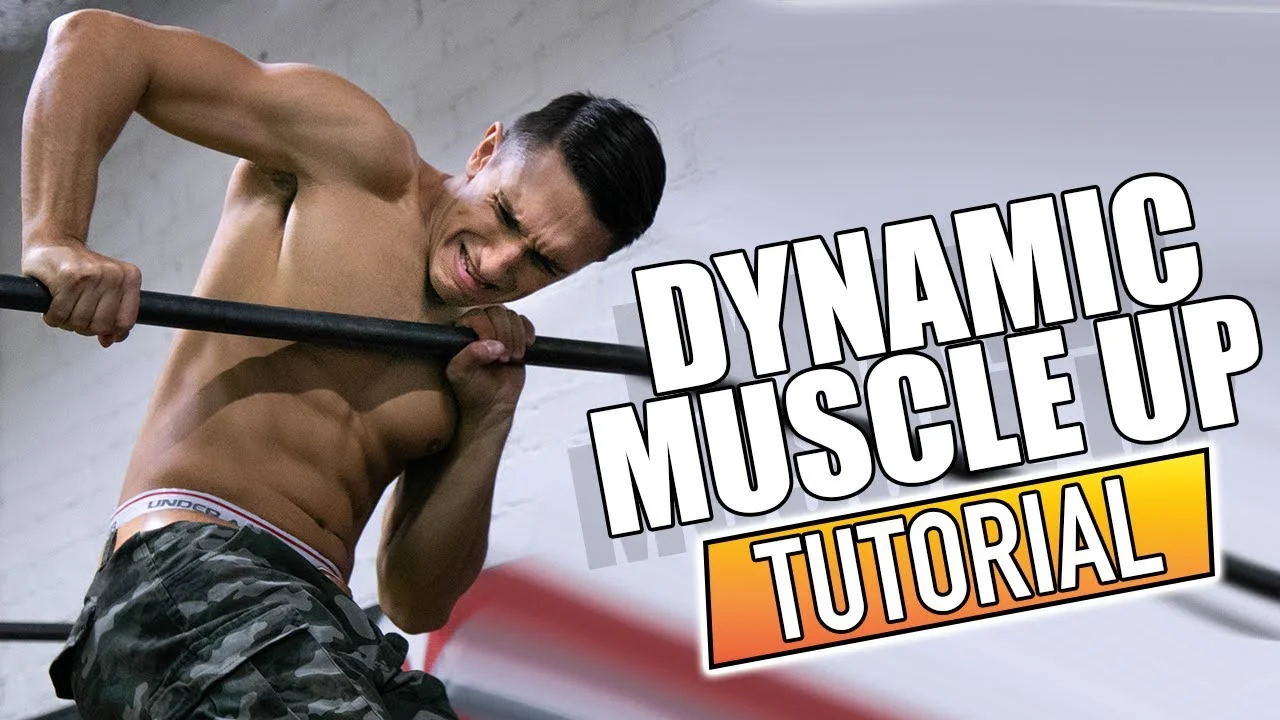
The dynamic muscle up, also called the freestyle muscle up or kip muscle up, is the standard way to get over the bar in street workout and calisthenics freestyle. Unlike a strict muscle up that depends on upper body strength, the dynamic version uses leg momentum and technique to carry you over the bar with minimal arm effort. This makes it essential for freestyle flow: using a strict muscle up in a combination wastes strength on a transition and kills your momentum for the skills that follow. In this tutorial I cover all four steps of the technique, including the power button method that makes the timing click. By the end, you will have a clear framework to start practicing it, even if you have never done a muscle up before.
Watch the Full Tutorial
What Is the Dynamic Muscle Up?
The dynamic muscle up is a bar skill where the athlete swings their legs to generate upward momentum, uses a specific kick sequence to amplify that momentum, and transitions their upper body over the bar with straight arms. The result looks fluid and fast compared to a strict muscle up.
It is classified as a technique-based skill rather than a strength-based skill. That does not mean it is easy, but it does mean that an athlete with modest pulling strength can learn it through practice if they understand the mechanics. The leg timing is the central challenge. Get the timing right and the bar feels like it drops toward you. Get it wrong and you stall mid-rep regardless of how strong you are.
In freestyle training, the dynamic muscle up serves as a transition move. It gets you from hanging to above the bar efficiently so you can continue into the next skill in a combination. For that reason, athletes who rely on strict muscle ups in freestyle quickly find their combinations become choppy and energy-inefficient.
Prerequisites
The dynamic muscle up is more technique than strength. That said, you need a comfortable dead hang, basic swing control, and enough pull strength to initiate the bar transition when the momentum is there. Being able to do 3 to 5 pull-ups helps but is not strictly required. What is required is the ability to swing on the bar with control and feel when your body is stretching and loading in the swing. If you are not comfortable hanging and swinging on a bar, practice that before the four steps below.
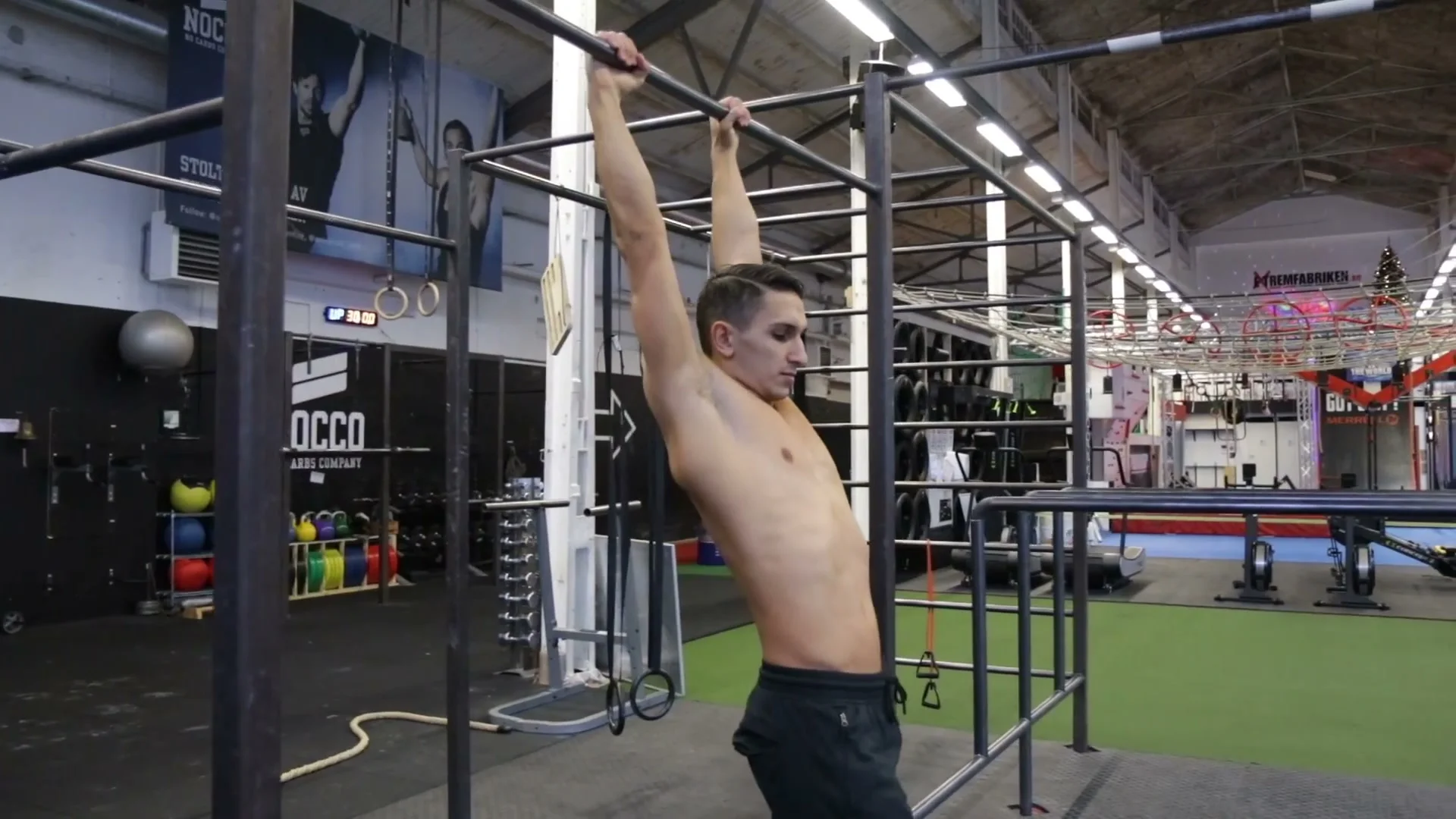
Technique: How to Do the Dynamic Muscle Up
Start from a low bar where your feet touch or nearly touch the ground. This allows you to practice the timing without the intensity of jumping to a high bar.
Keep your arms straight throughout the entire movement. This is the most important technical requirement. Bending your arms reduces the arc of the swing and makes it nearly impossible to get your upper body over the bar using momentum. Straight arms throughout the swing, the kick, and the transition are what allow the movement to work.
Core tension during the kick-down phase is what connects the leg momentum to the upper body. When you kick your legs down just before reaching the bar, engage your core hard. This transfers the leg force through the trunk and into the upward movement of your chest over the bar.
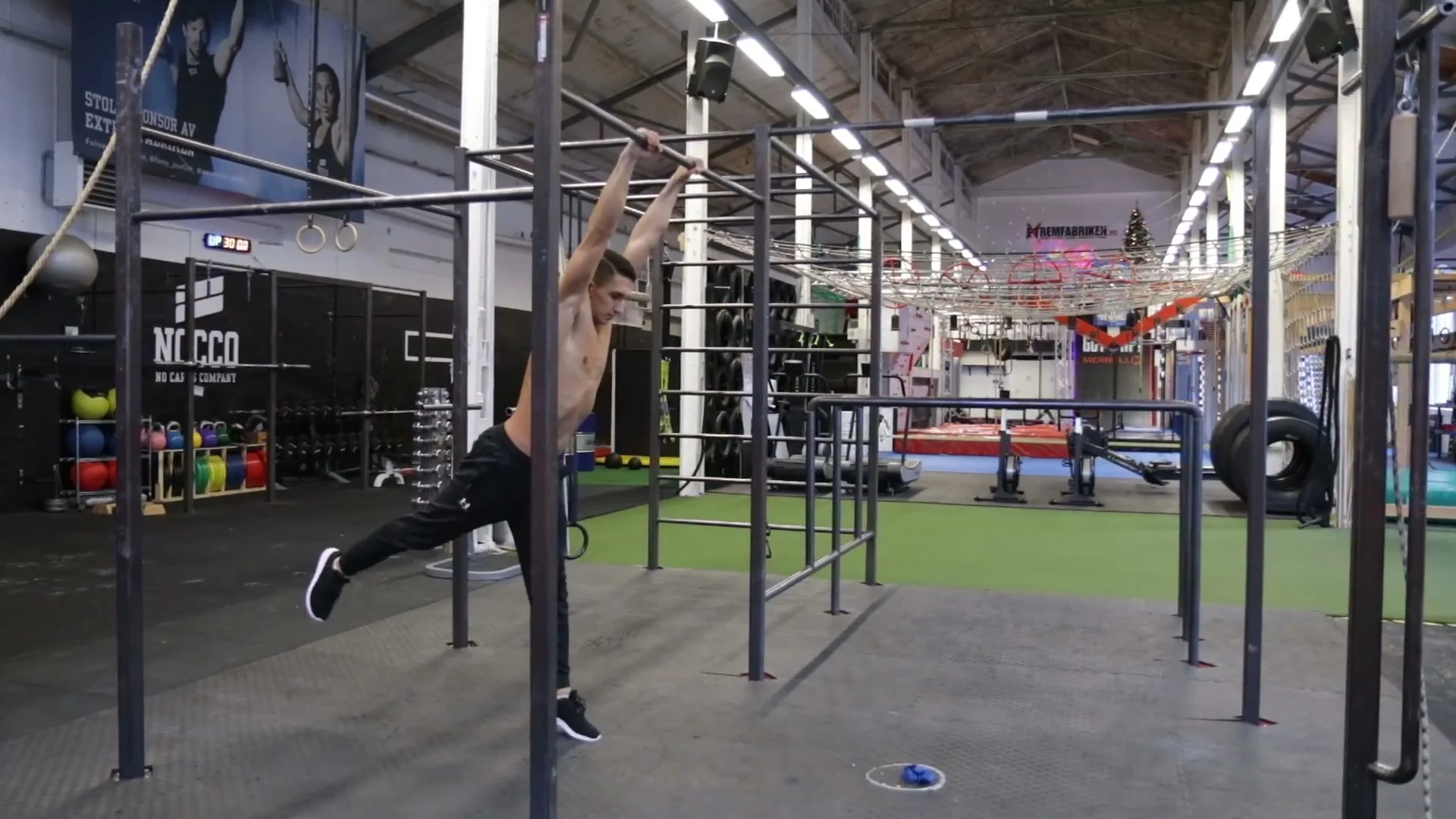
Progression: Training the Dynamic Muscle Up in 4 Steps
No one lands the dynamic muscle up on the first attempt. These four steps break the movement into learnable pieces and give you a clear sequence to practice.
Step 1: Find the Power Button
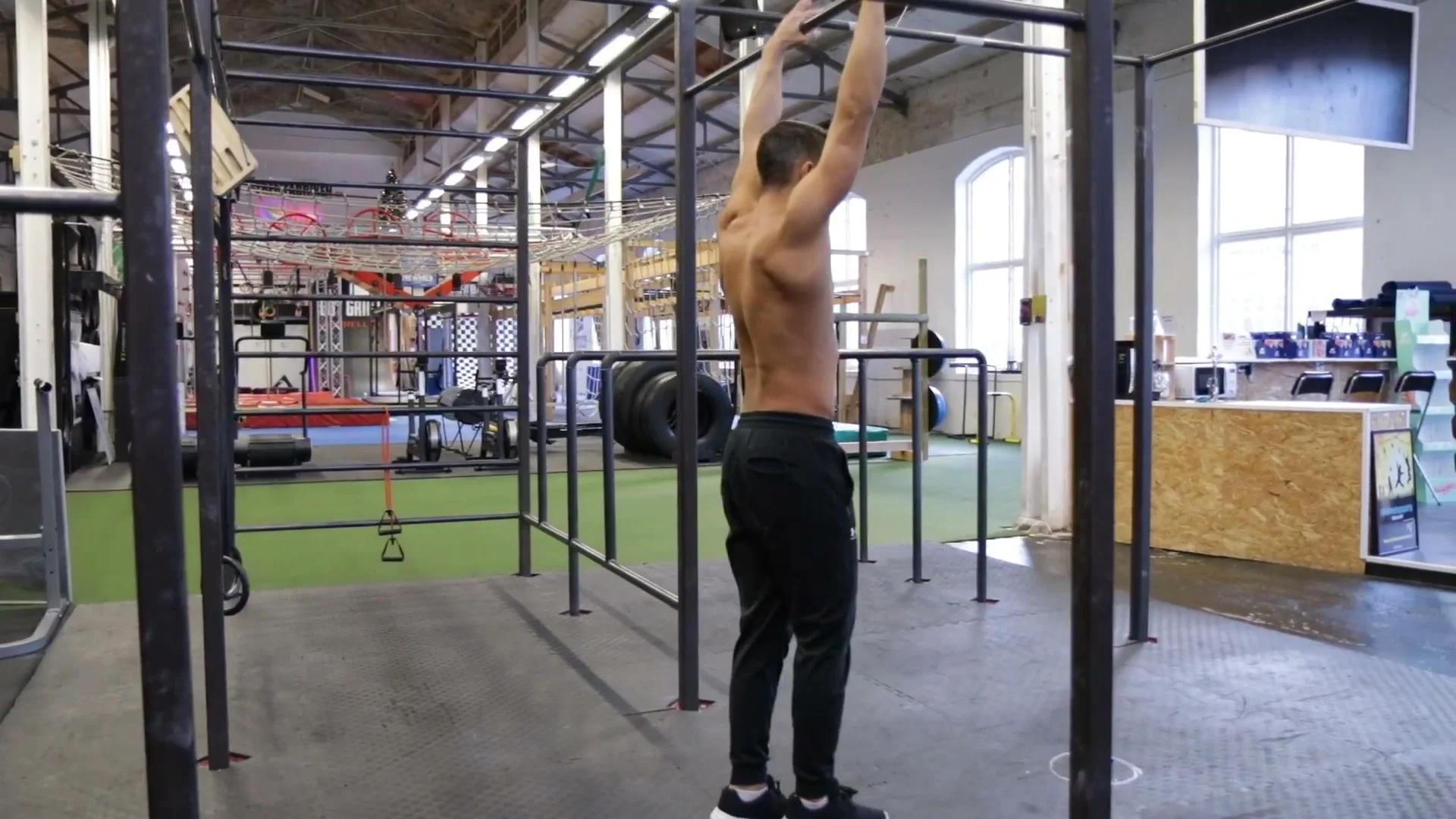
Grab the bar while standing on the ground. Hold the bar and walk forward as far as possible while keeping your hands on the bar, stretching your body out fully. The point where your feet land at maximum stretch is the power button. Mark this spot with a small object or draw a circle on the ground.
The power button is where you want your feet to land during the swing. When you hit it, your body is fully extended and loaded. That extension is what stores the energy you will use in the kick phases.
Step 2: Start the Swing
Stand directly below the bar. Bring one foot back as far as you can. Then kick that rear foot forward toward your other foot with a straight leg. This kick starts the pendulum swing. Let the second foot match the first and swing both feet forward together.
The goal of this step is to build a controlled, consistent swing. The forward swing should feel smooth, not jerky. Practice the swing alone until you can reliably send both feet forward in a straight line toward the power button.
Key Takeaway
Step 3: Press the Power Button
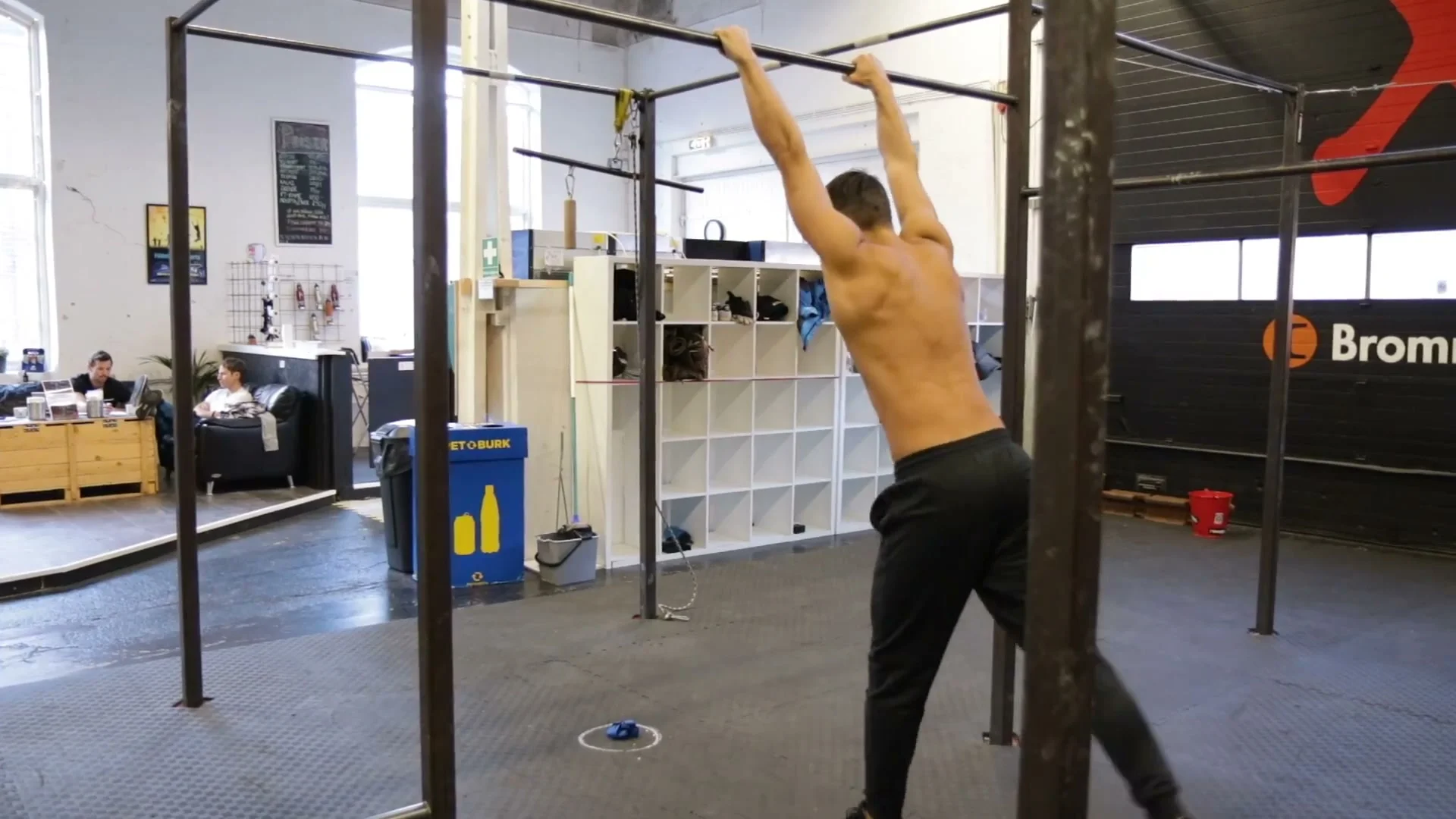
As you swing forward and your feet reach the marked spot, actively press your feet down toward the power button. This is not a passive landing. You are consciously extending and loading your body at that moment.
Think of it like loading a bow and arrow. At the power button, your entire body is stretched and compressed simultaneously. The energy you store here is what the next kick amplifies. Without this loaded moment, the kick-up in step 4 will not generate enough upward force.
Step 4: Kick Up, Then Kick Down
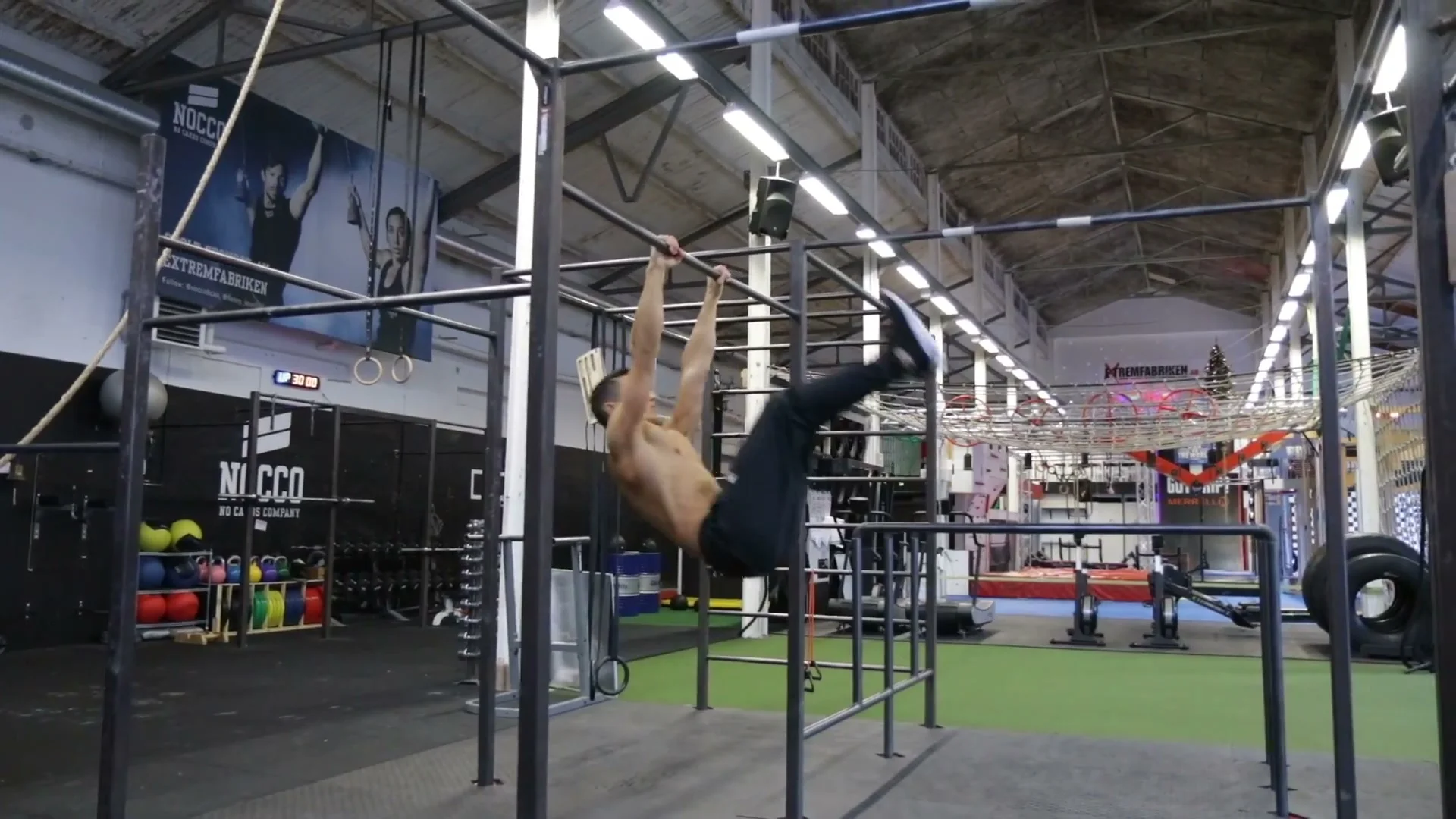
After pressing the power button, kick your feet up with straight legs toward the bar. Keep your arms straight. At the highest point of the kick, just before your feet would hit the bar, switch direction and kick your legs down hard. At the same time, drive your upper body over the bar.
The timing of this switch is the central skill of the dynamic muscle up. The downward kick combined with core tension creates a whipping motion that launches your chest over the bar. Tense your core during the kick-down and keep your arms extended as you come over the top.
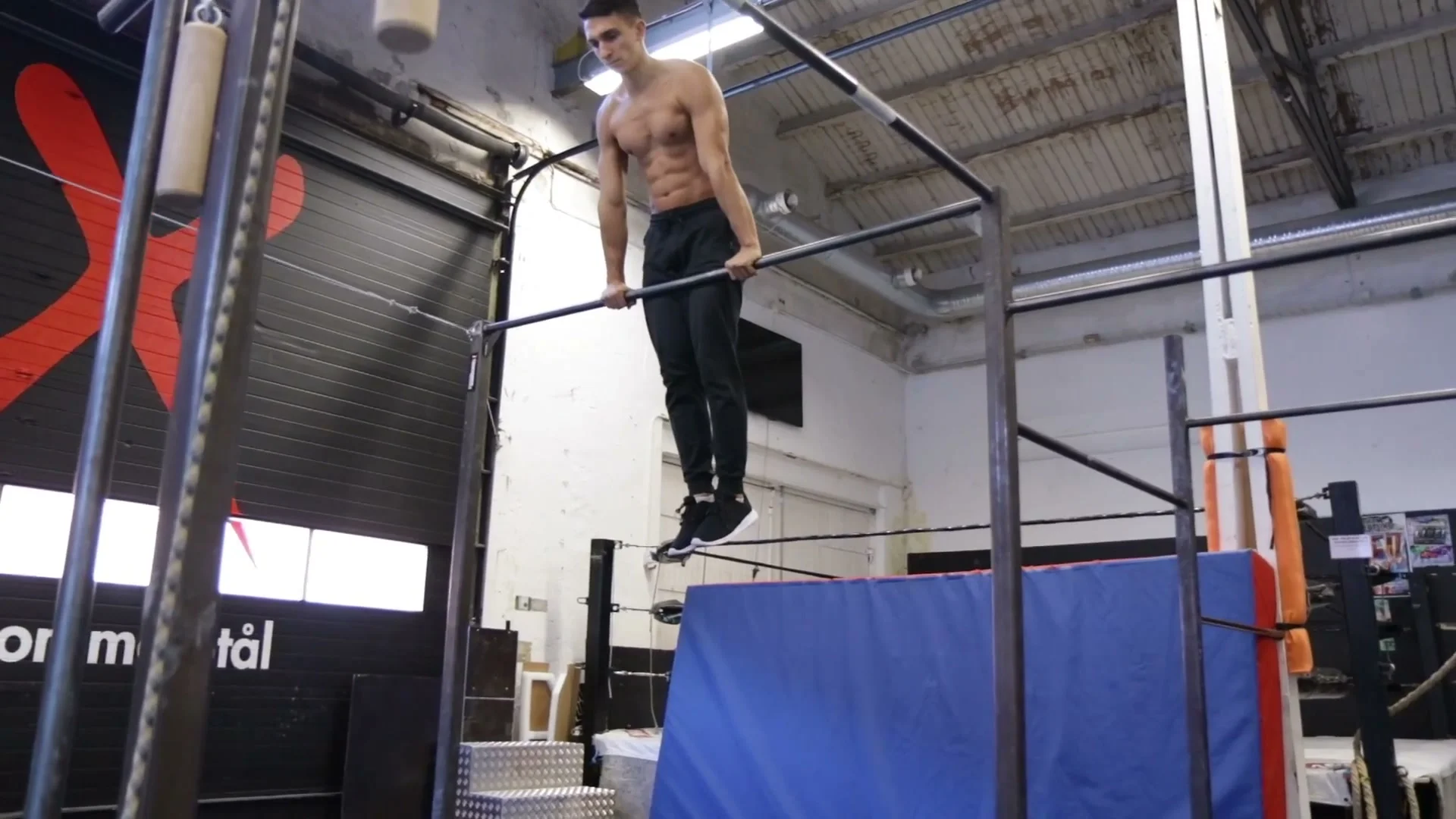
Once you can land the dynamic muscle up consistently on a low bar, move to a higher bar and jump into the swing. The four steps are identical. The jump entry adds a small extra variable to the timing but the mechanics are the same.
Common Mistakes
These are the mistakes I see most often, and they are all fixable.
Bending the Arms
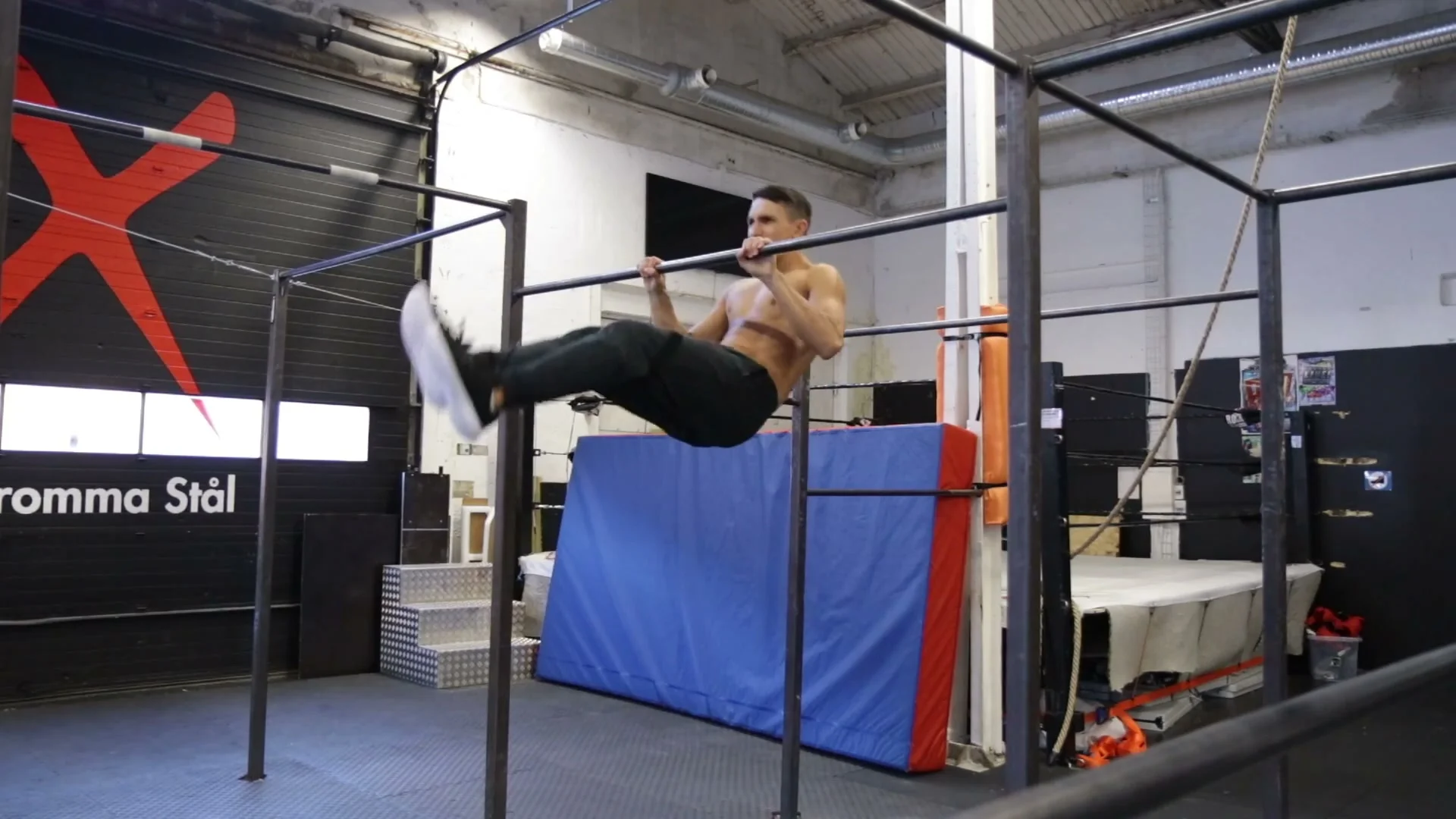
Bending the arms during the swing shortens the radius of the pendulum and reduces the momentum available for the transition. It also puts you in a position where getting your chest over the bar requires a strong pull, which defeats the purpose of the dynamic technique. Keep arms straight from the first swing through the full bar transition.
Not Kicking Up Enough
If the legs do not kick high enough before the downward kick, there is not enough upward momentum to carry the upper body over the bar. The result is a stall just below the bar. Fix this by focusing on the height of the kick-up first, then layering the kick-down timing onto it once the height is consistent.
Missing the Kick-Down Timing
Kicking down too early, before the feet approach the bar, means the whipping motion happens in the wrong position and does not transfer to the upper body. Kicking down too late means the feet hit the bar before the transition starts. The kick-down should happen at the peak of the kick-up, just as the feet would reach bar height.
Forgetting Core Tension
Core tension is what connects the leg kick to the bar transition. Without it, the kick-down produces leg movement but no upward chest drive. Focus on actively bracing and tensing the core the moment the kick-down begins.
Training Tips
Practice on the lowest bar available when first learning. A bar at hip or shoulder height where you can stand on the ground and control the swing without jumping gives you the most feedback and the lowest stakes for errors.
Isolate each step before combining them. Practice the power button setup and swing separately from the kick phases. Once the swing consistently hits the power button with a loaded feeling, add the kick-up and practice that alone before adding the kick-down.
Film yourself from the side. The timing of the kick-down is very difficult to feel in the moment. Video from a side angle shows clearly whether the kick-down is happening at the right point or too early or too late.
Do not attempt this on a high bar until you are consistent on a low bar. The stakes are higher with a jump entry and the time pressure is greater. Build confidence at a manageable height first.
Once the movement is working, practice it at the start of each freestyle session before fatigue sets in. Timing-based skills are learned more effectively when the nervous system is fresh.
Frequently Asked Questions About the Dynamic Muscle Up
Do I need to do strict muscle ups before learning the dynamic muscle up?
No. The dynamic muscle up is primarily a technique skill, not a strength skill. You do not need to be able to do strict muscle ups first. That said, having some pull-up strength, even 3 to 5 reps, makes the bar transition easier once your momentum is in the right place.
What is the power button and why does it matter?
The power button is the specific point on the ground directly below and slightly forward of the bar where your feet should land during the swing. At that point, your body is fully stretched and loaded. Hitting the power button consistently is what makes the kick-up and kick-down work as a coordinated sequence. Without it, the timing of the kicks has no reliable reference point.
How long does it take to learn the dynamic muscle up?
Most athletes with basic swing control can get their first dynamic muscle up within one to four weeks of focused practice. Consistently clean reps with good form typically take one to three months. The timeline depends heavily on how much time you spend practicing the steps in isolation before combining them.
What is the difference between the dynamic muscle up and the strict muscle up?
The strict muscle up uses upper body pulling strength to pull the body from below the bar to above it. The dynamic muscle up uses leg momentum and a whipping kick to carry the body over the bar with minimal arm effort. In freestyle training, the dynamic version is the preferred transition because it conserves strength and maintains flow.
Why do my arms keep bending during the dynamic muscle up?
Bent arms are usually a habit from pull-up training, where bending the arms is the whole point. For the dynamic muscle up, straight arms need to become a conscious override during the swing. Practice hanging and swinging with a focus on arm lock-out before adding the kick steps. If the arms still bend during the kick phases, it often means the leg momentum is not strong enough yet and the body is trying to compensate with pulling.
Can I learn the dynamic muscle up at home without a gym bar?
Yes, if you have access to any suitable bar, including a doorframe pull-up bar, a playground bar, or an outdoor calisthenics park. The low-bar setup described in step 1 is especially useful because it requires nothing more than a bar you can stand under. A horizontal ladder or similar structure also works for the initial practice steps.
Daniel Flefil
Calisthenics coach with 11 years of experience, co-founder of Calixpert, and organizer of Beast of the Barz, one of the world's largest calisthenics competitions. Based in Stockholm. I write about training, equipment, and everything that goes into building a serious calisthenics practice.
More about Daniel →