
Daniel Flefil
August 4, 2022 · 7 min read
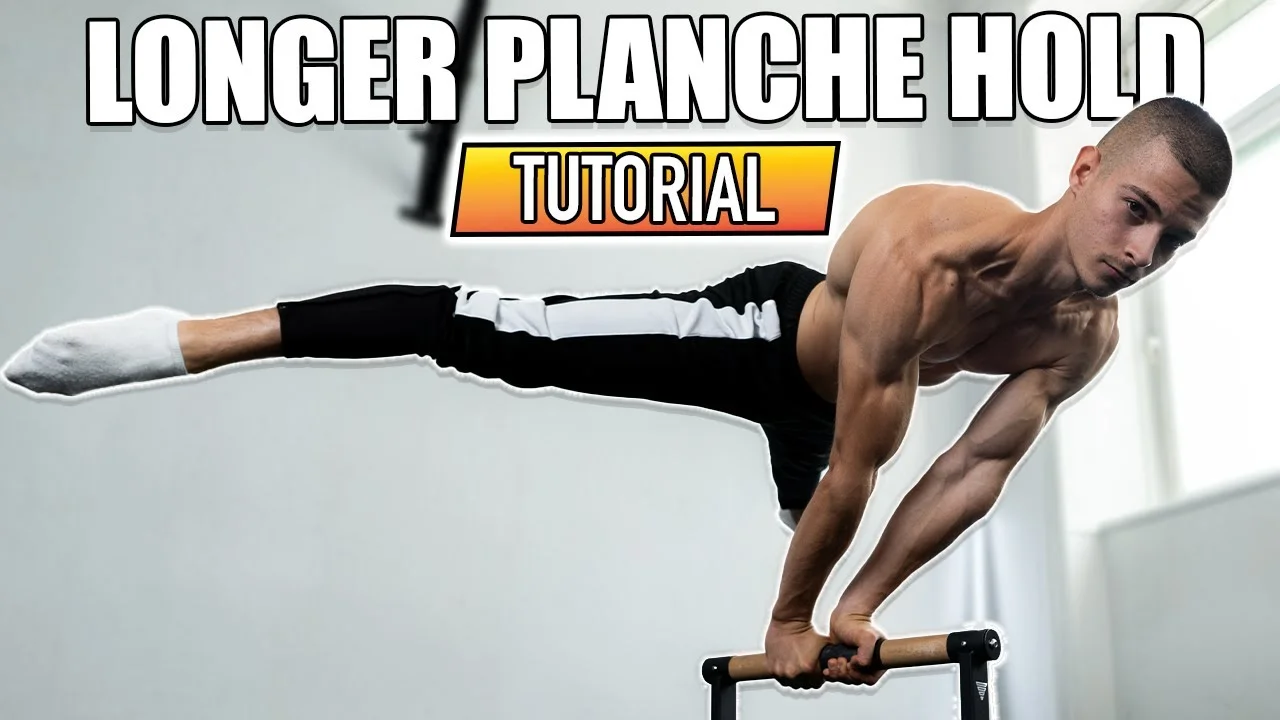
The straddle planche is not just about getting into position. Holding it is a different challenge entirely, and most athletes plateau long before they build the stability to hold clean. For this video I trained with Daniel Hristov, world champion in calisthenics, and he shared the five exercises he uses to build planche hold strength. This is an advanced program. If you are still working toward your first straddle planche, start with the beginner planche exercises first. If the straddle is within reach but the hold keeps falling apart, these are the exercises to run.
Watch the Full Tutorial
What Is Planche Hold Training?
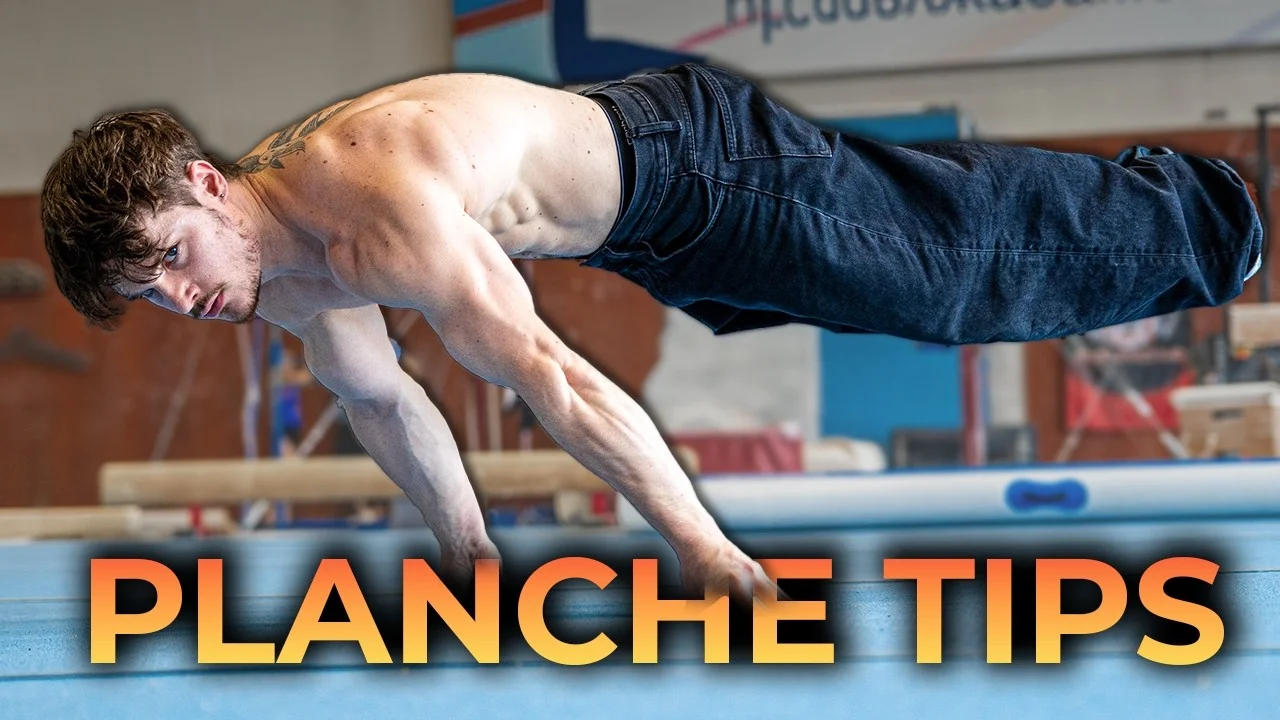
The straddle planche is a horizontal hold on parallettes with legs spread wide, arms straight, and the body parallel to the floor. Getting into the position and holding it are two different skills. Athletes who can press into the straddle but lose it within one or two seconds are missing specific strength in the shoulder, scapula, and lock position. Planche hold training targets that gap directly.
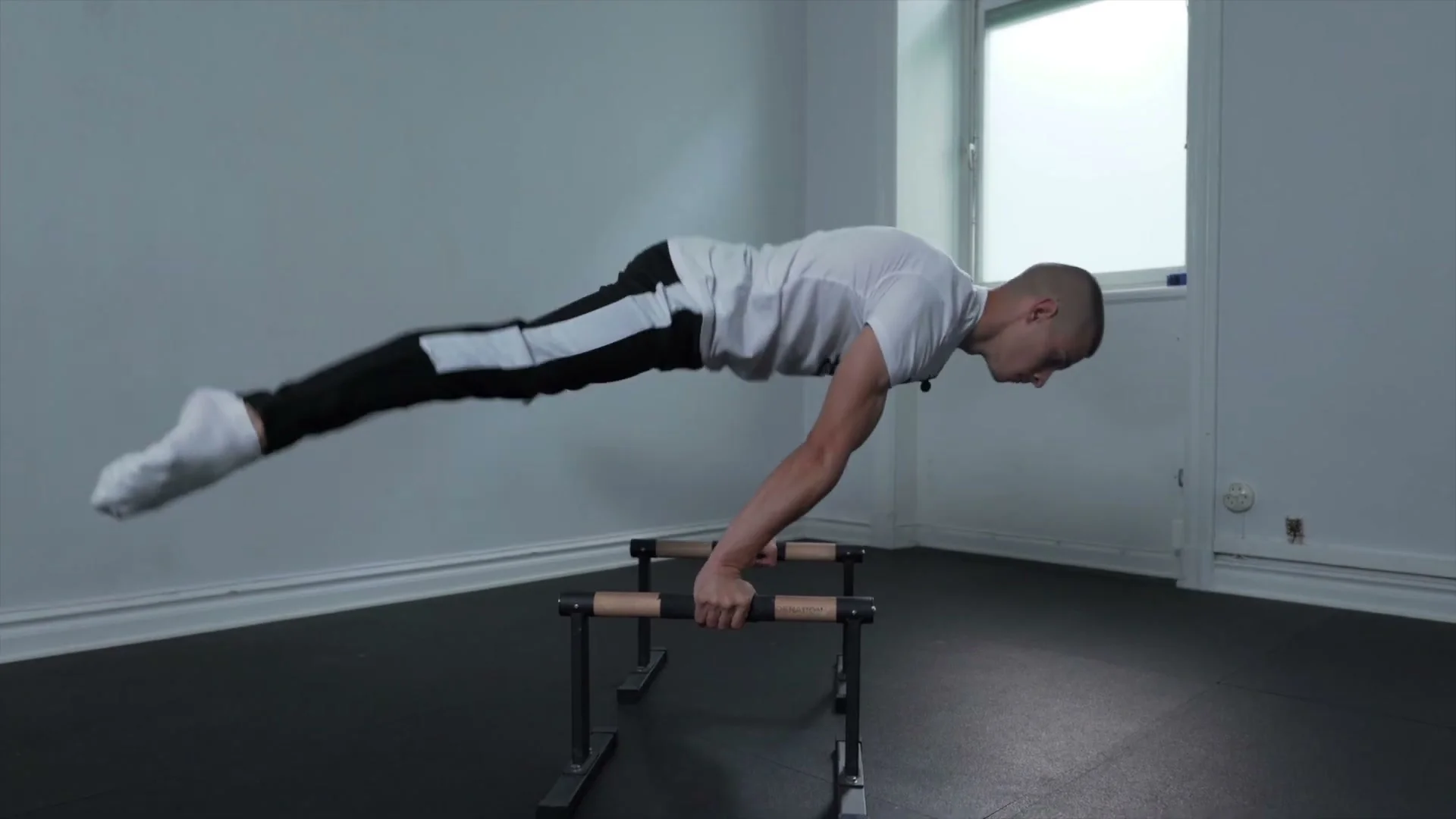
Hristov is direct about the level of this program: it is not for beginners. The exercises require that a straddle planche or strong tuck planche already exists. The goal is not to learn the position. The goal is to hold it longer and with more control.
The Three Cues That Run Through Every Exercise
Before the first exercise, Hristov establishes three cues that apply to every movement in this program.
The first is the wrist position. The wrist stays in the middle, not rotated too far outward or inward. The same neutral grip from the beginner exercises carries through here.
The second is the elbow and biceps direction. Elbows locked and biceps facing forward. Hristov flags this specifically: even high-level athletes who can hold the straddle planche often do it with bent or unlocked elbows. That is a mistake. Locking the elbows is non-negotiable.
The third is protraction. In the straddle planche, the target protraction level is not maximum. Hristov describes it as roughly 50 percent. At zero protraction the shoulders drop. At 100 percent the position becomes unstable. The middle range is where control lives.
Exercise 1: L-Sit to Straddle Planche
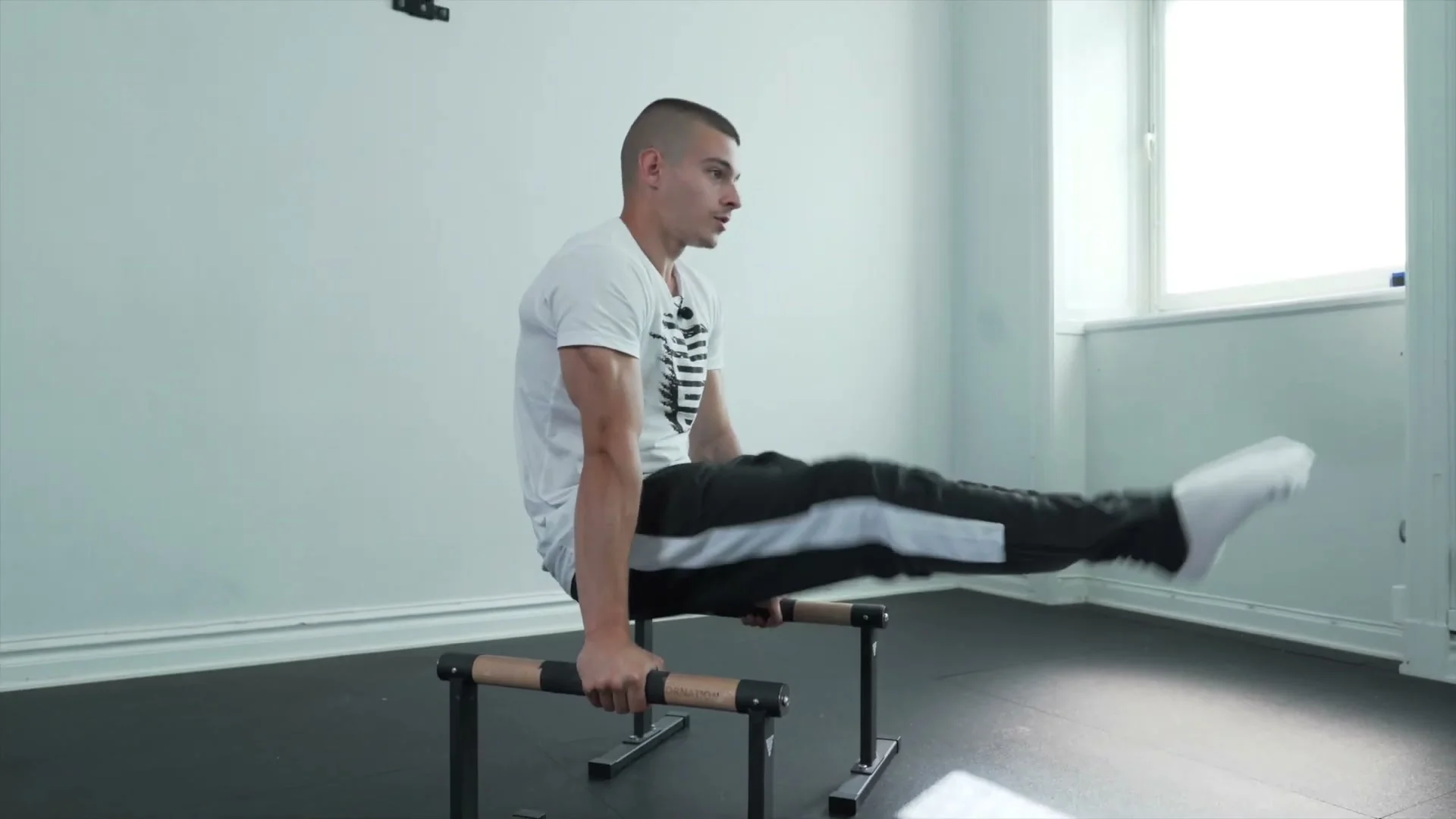
The first exercise starts from an L-sit on the parallettes. From the L-sit, apply a small amount of protraction and shift forward into the offset position. From there, move into a tuck and push out to the straddle planche. Pulse lightly in the straddle position, then return to the L-sit.
The key correction Hristov makes here is the protraction timing. When transitioning from the tuck into the straddle, protraction must already be active. If it drops during the tuck phase, recovering it in the straddle is not possible. The protraction cannot be added after the transition. It has to be maintained through it.
The protraction level in the straddle hold: think of zero as none and 100 as maximum. Aim for 50 percent. That range provides scapula elevation without compromising shoulder stability. Fifty percent is the working range for the straddle hold in this program.
Key Takeaway
Exercise 2: Handstand Negatives to Straddle Planche
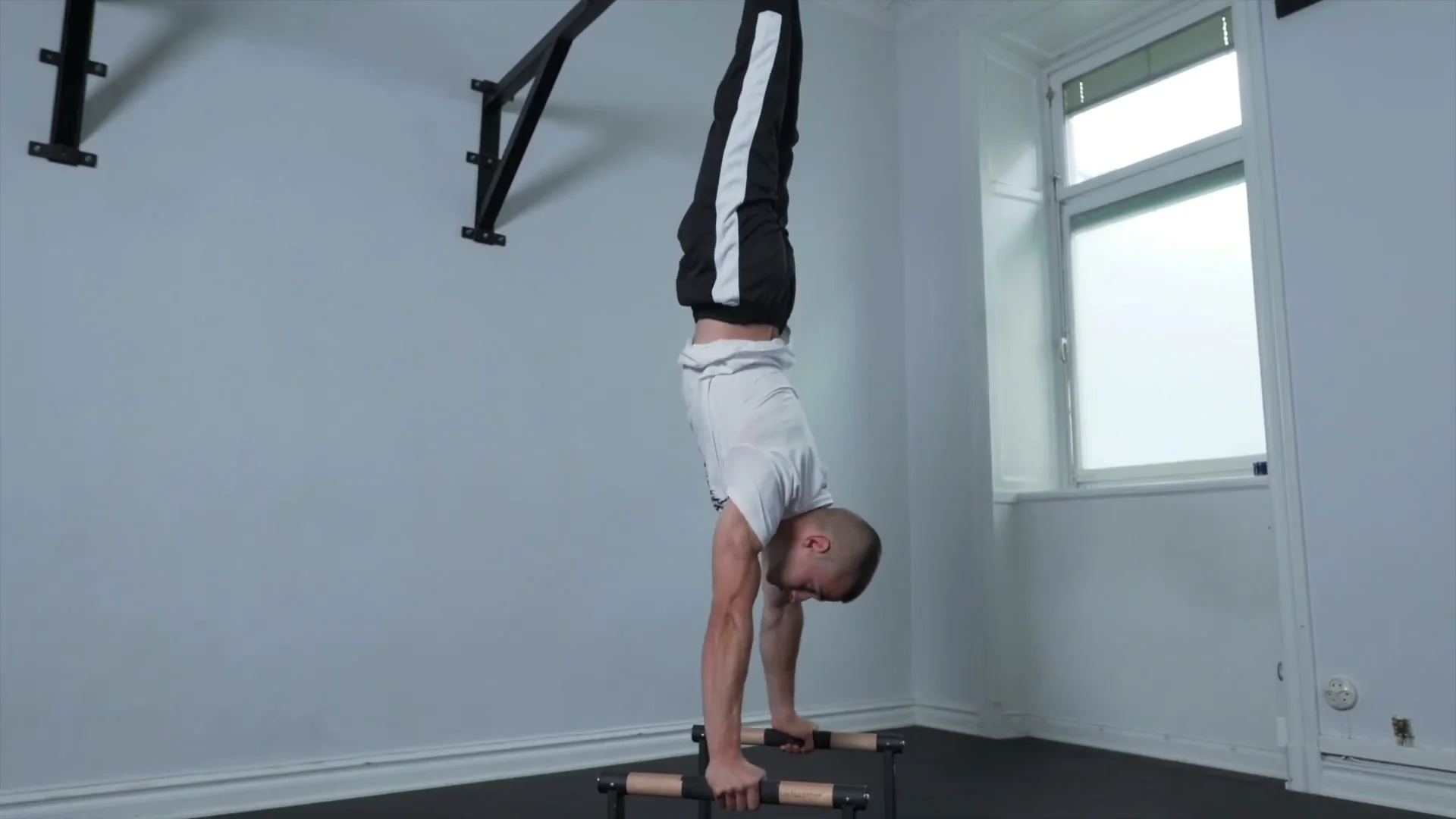
The second exercise is negatives from the handstand into the straddle planche. Start from a handstand on the parallettes. Open the legs from the top and lower the body slowly toward the straddle planche position. Stop in the straddle hold, apply protraction, keep the hips down, and hold.
The hold duration matters. Hristov is specific: two seconds is the target hold. Not five. This seems counterintuitive, but a two-second hold in the correct position is more effective than a five-second hold where the position deteriorates. A clean two-second hold with full protraction and locked elbows trains the exact strength needed. A five-second hold that slowly collapses trains poor mechanics.
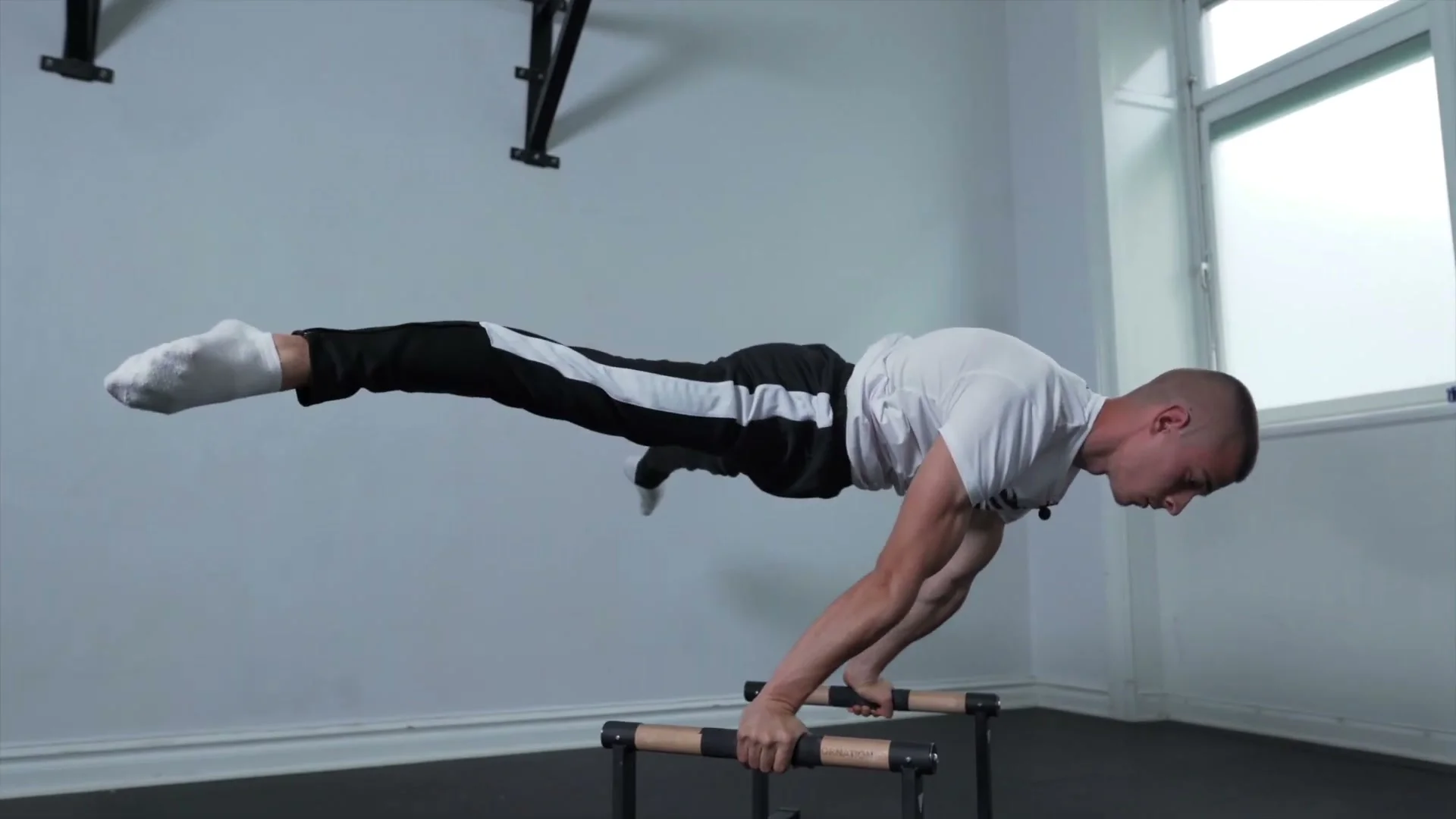
If reaching the handstand is not yet possible, the exercise can be started from a lower inversion point. The movement pattern matters more than the starting height. What trains the hold is the slow controlled descent and the clean stop in the straddle position.
Exercise 3: Tuck, Full Planche, and Straddle Combo
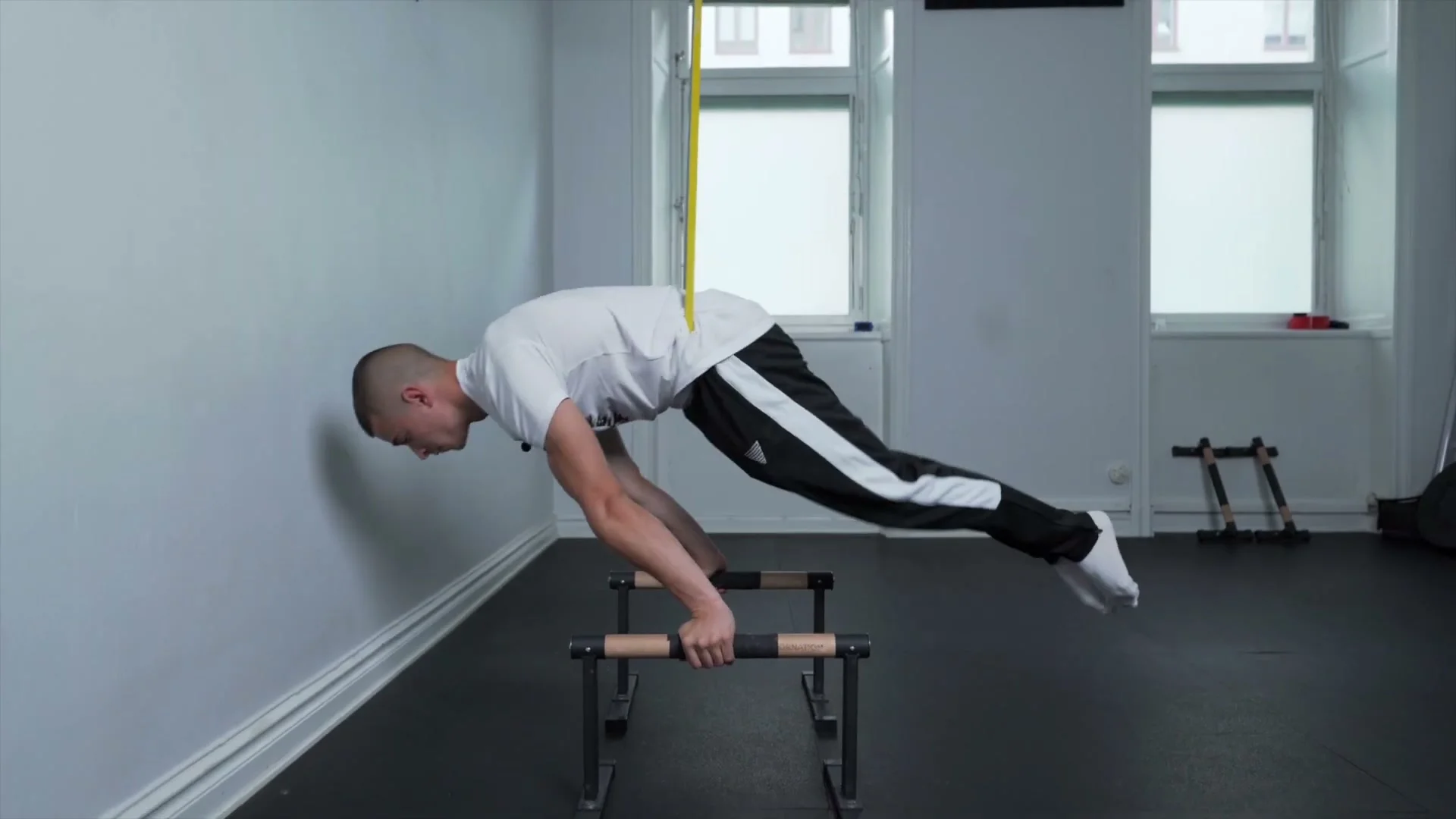
The third exercise is the hardest in the video. It combines three positions in sequence: tuck planche into full planche, then immediately into straddle planche.
The sequence: start in the tuck planche with active protraction. Push into the full planche. Hristov uses an elastic band for assistance on the full planche portion. From the full planche, transition fast into the straddle planche and hold.
The logic behind this sequence is deliberate. When an athlete trains toward a harder skill, a slightly easier skill within that family becomes more accessible. Training the full planche, even with band assistance, conditions the body to a higher load than the straddle. When that band comes off and the position drops to straddle, the straddle hold feels more stable.
Run this complex for multiple sets. The tuck entry, full planche pause, and fast straddle transition each place load on a different part of the shoulder range. Together they cover the entire strength curve of the planche hold.
Exercise 4: Deep Lean Push-Ups
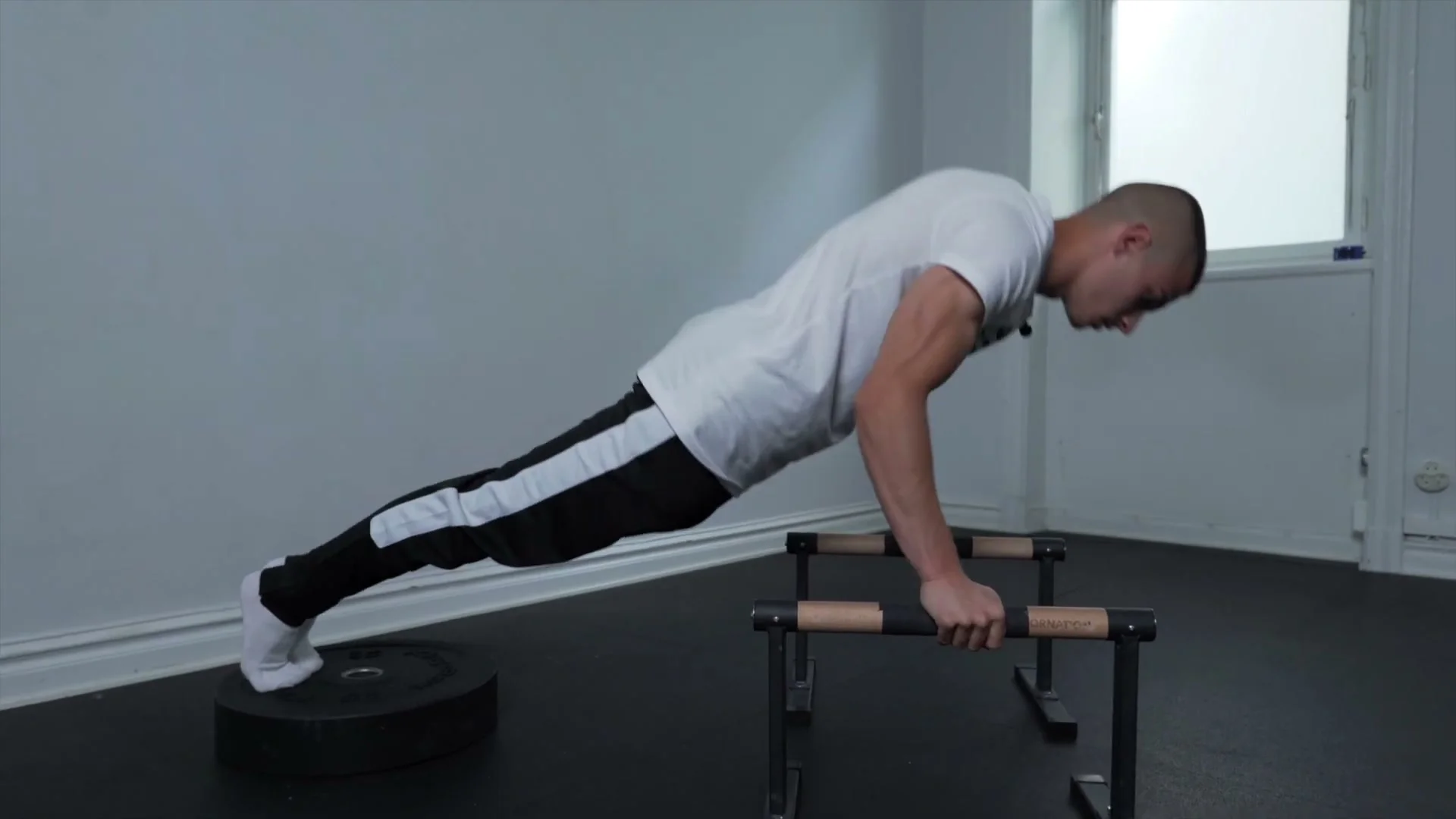
The fourth exercise is deep lean push-ups on parallettes. This is not the same as the planche lean from the beginner program. The lean here is active and combined with a push-up in a straight body line.
The setup: wrist in the middle, elbows and biceps facing forward, hip slightly down. The forward lean is moderate. Not so far forward that the position collapses, not so little that the planche-specific load disappears. The middle lean is the working range.
Feet can be flat on the floor or elevated slightly on a weight plate for added difficulty. Hristov demonstrates both. The elevated version places more load on the lean and makes the exercise harder. Start with feet on the floor and add elevation as the position becomes stable.
Push up from the lean, hold briefly at the top with full protraction, then lower back down. Do not lose the lean during the push-up. The lean must be maintained throughout, not just at the top.
Exercise 5: Planche Push-Ups
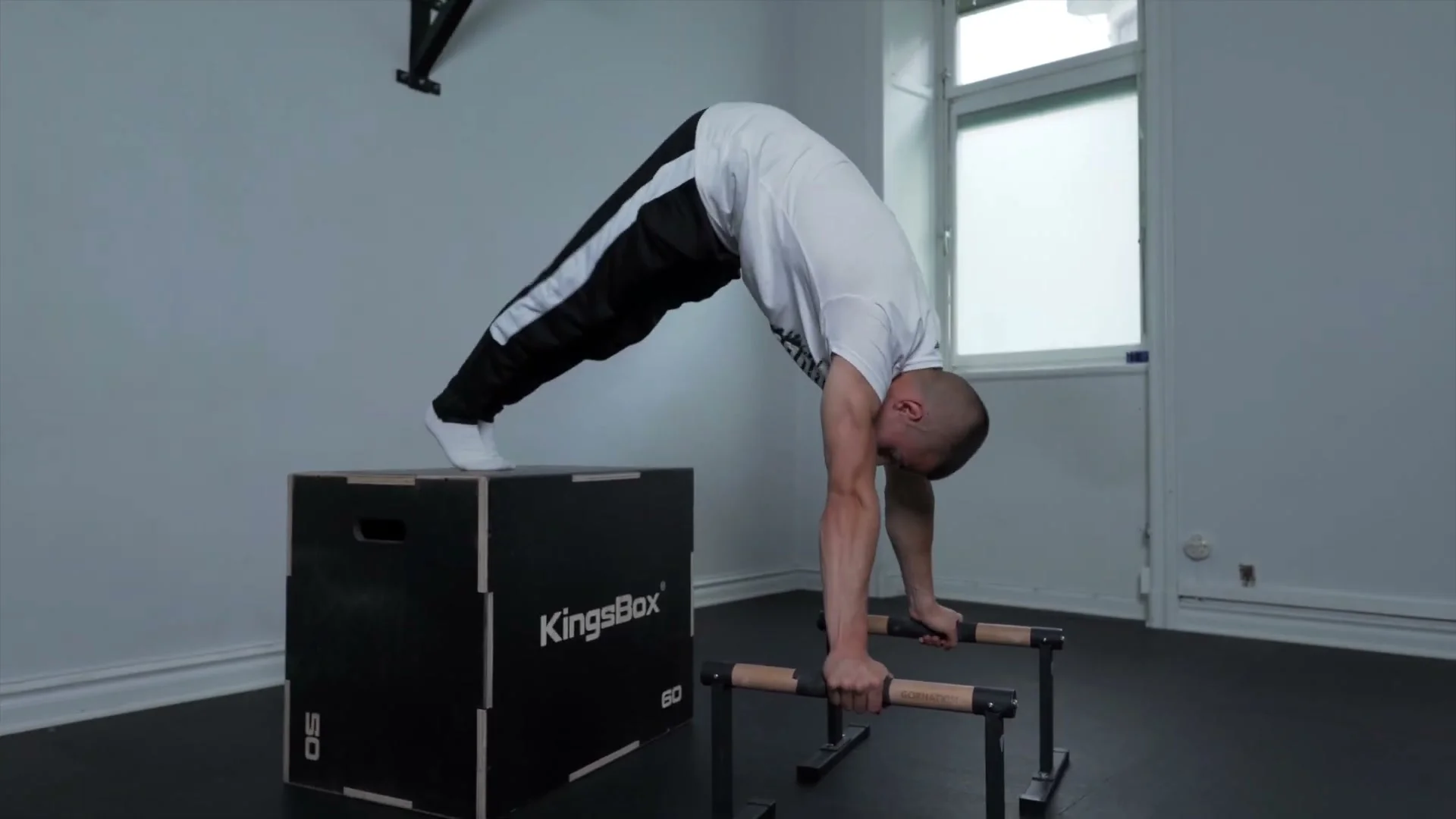
The fifth exercise is planche push-ups with feet elevated. The same grip cues apply: wrist in the middle, elbows locked, biceps and elbows looking forward.
With feet on a box, the body angle becomes steeper and the forward lean more pronounced. The head faces down toward the parallettes rather than forward. Hristov's cue for head position: look at the middle of the parallettes. The head stays in line with the hands, not jutting forward or tucking in.
These can also be done on the floor if parallettes are not available, but the wrist position requires more care on the floor. Hristov recommends the floor version only if the wrist can stay in a neutral middle grip throughout.
The angle of the lean is specific. Too steep and the body weight shifts incorrectly. Too shallow and the load becomes a standard push-up. The correct angle places most of the load through the shoulder and the forward lean, which is what builds the planche-specific strength.
Training Tips
Use parallettes for every exercise in this program. Floor planche work forces the wrists into full extension, which limits training volume and adds injury risk over time.
Elastic bands for the full planche in exercise three are a training tool, not a shortcut. The band allows training at a load that is not yet achievable unassisted. The straddle unassisted becomes easier as a result. Use the band until the full planche hold is consistent, then reduce assistance gradually.
The two-second hold in the handstand negative is more specific advice than it seems. Hristov codes this into the exercise for a reason. Athletes who chase duration in the straddle before they have clean mechanics are training the wrong pattern. Get the two-second hold perfect before pushing for longer.
Work through all five exercises in a single session or split them across the week. Exercises one, two, and three are the heaviest in terms of shoulder demand. If fatigue is affecting position quality, stop. The value in these exercises comes from controlled reps, not volume at the expense of form.
Frequently Asked Questions About Planche Hold Training
How long should I be able to hold the straddle planche before doing these exercises?
There is no minimum duration, but the straddle planche must be accessible. If it cannot be entered at all, these exercises are not the right starting point. Get into the straddle first using beginner exercises, then use this program to extend the hold duration and quality.
Why is the hold target only two seconds in the handstand negative?
Two seconds of clean position is more effective than five seconds of degraded position. Hristov is specific about this: when the hold deteriorates, the muscles adapting are the wrong ones. Two clean seconds with locked elbows and active protraction trains the correct pattern. Chase quality, then duration.
What is the 50 percent protraction rule?
In the straddle planche, full protraction creates instability and zero protraction causes the shoulders to drop. The working range is the middle. Hristov describes this as 50 percent: scapula elevated and forward, but not pushed to maximum. This position allows shoulder control through the hold without the instability of maximum protraction.
Why does the full planche in exercise three make the straddle easier?
Training at a higher load conditions the body to a greater demand. The full planche is harder than the straddle planche. When the body has trained toward the full planche, even with band assistance, the straddle falls within a range the body can handle more easily. This is a standard principle in strength training applied to planche specifically.
Can I do these exercises without an elastic band?
Exercise three uses an elastic band for the full planche portion. If no band is available, substitute with a longer hold in the tuck planche before transitioning directly to straddle. The band version is more effective because it trains the full planche mechanics, but the tuck-to-straddle version still builds the transition strength.
Are locked elbows really that important?
Yes. Hristov calls it out explicitly in the video because even advanced athletes often skip it. An unlocked elbow changes the load path and reduces shoulder stability in the straddle position. Every rep in this program should have fully locked elbows. If the elbows bend during the hold, the position is not yet stable enough and the weight should be reduced or the progression stepped back.
How many sessions per week should I run this program?
Hristov does not prescribe a frequency in this video, but the exercises are demanding on the shoulder joints. Two to three sessions per week with at least one rest day between sessions is a reasonable starting point. Monitor shoulder recovery and reduce frequency if soreness accumulates between sessions.
Daniel Flefil
Calisthenics coach with 11 years of experience, co-founder of Calixpert, and organizer of Beast of the Barz, one of the world's largest calisthenics competitions. Based in Stockholm. I write about training, equipment, and everything that goes into building a serious calisthenics practice.
More about Daniel →