Daniel Flefil
July 28, 2022 · 8 min read
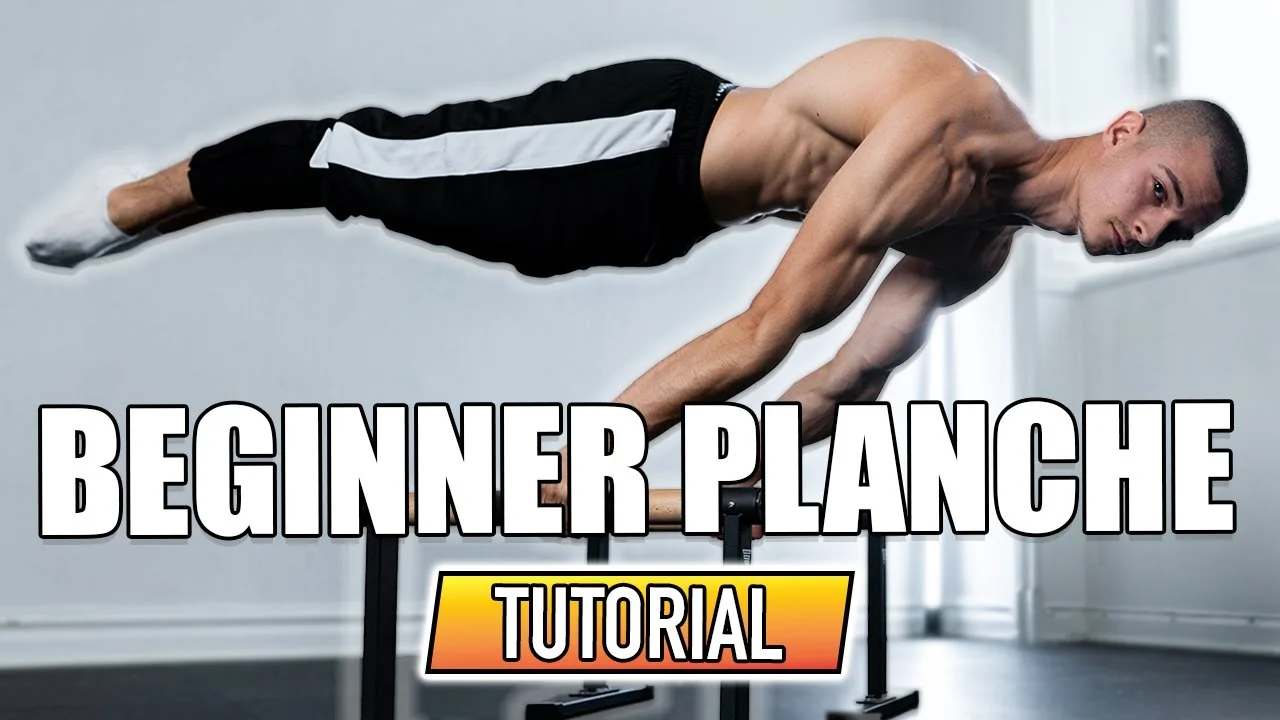
The planche is one of the most difficult static holds in calisthenics. It requires years of consistent work, and where beginners start has a direct effect on how fast or slow that journey goes. For this video I trained alongside Daniel Hristov, world champion in calisthenics and street workout, and he shared his top five beginner planche exercises. This is not theory. He coached each one in real time, corrected my form on every rep, and revealed one technique fix that even experienced athletes miss. Parallettes are needed for this program. Everything else can be built from scratch.
Watch the Full Tutorial
What Is the Planche?
The planche is a gymnastic and calisthenics skill where the body is held horizontally off the ground with only the hands as the contact point. The arms are straight, the body is parallel to the floor, and every muscle from shoulders to feet is under load. It is considered one of the highest-level static strength skills in bodyweight training.
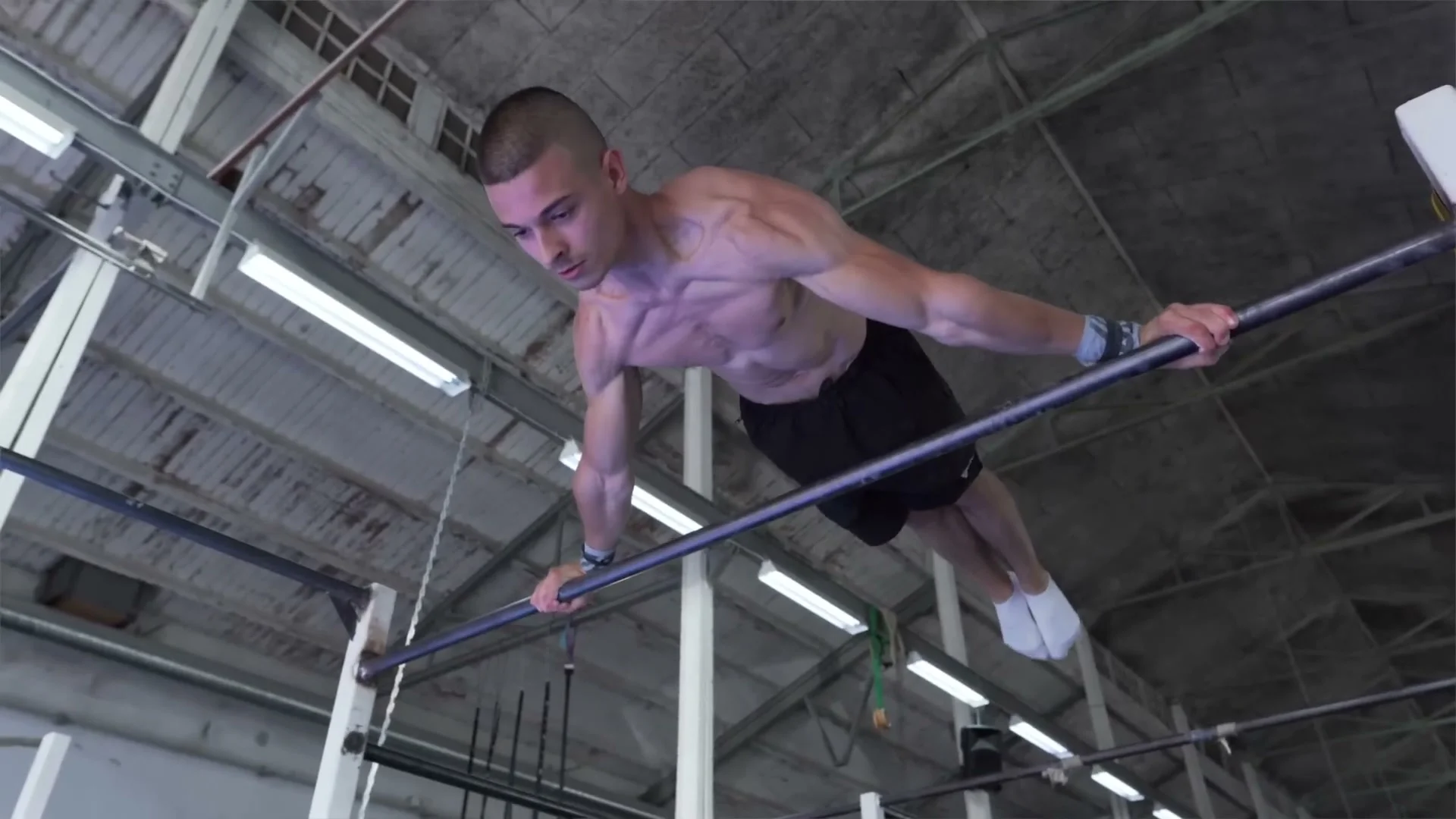
The five exercises in this video are not shortcut skills or planche variations. They are the foundational work that must be in place before more advanced positions become accessible. Hristov is direct about this: skipping the basics delays the planche, not the other way around.
Why Parallettes
Parallettes are the first tool Hristov recommends before starting any planche work. They allow a neutral wrist position, which is more comfortable and safer for the extended holds and loading that planche training requires. On the floor, the wrists are forced into full extension, which adds discomfort and injury risk, especially in early training when the connective tissue is not yet adapted.
The Right Grip Before Anything Else
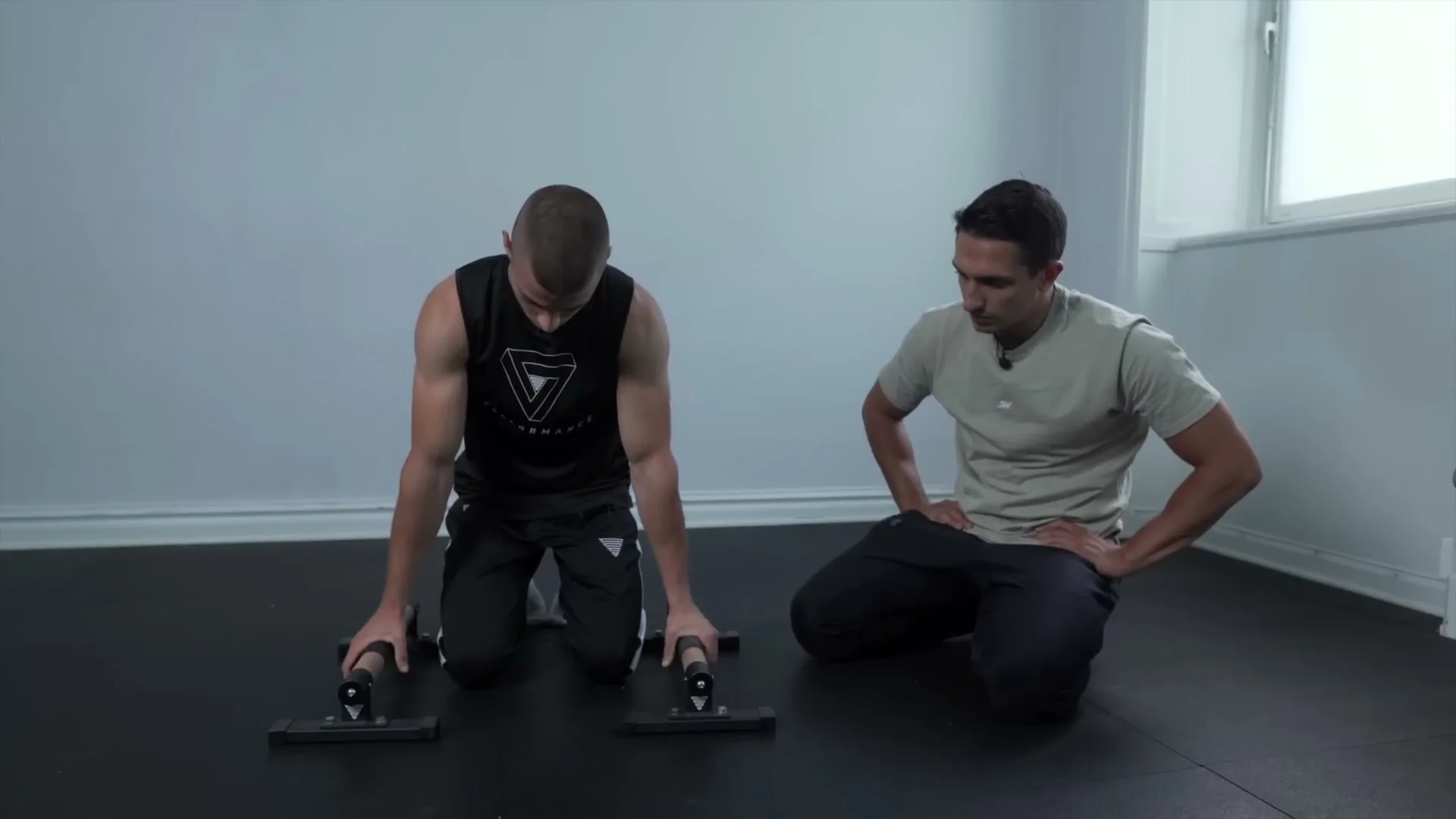
Before the first exercise, Hristov corrects the wrist position. The wrist should not be turned too far to the outside, which puts excess load on the thumb and creates a weaker grip. It should not be turned too far inside either. The correct position is in the middle: a neutral grip where the wrist is aligned with the forearm. This position is more comfortable, reduces injury risk, and gives the shoulder better flexibility for the forward lean that planche requires.
Get the grip right before starting any of the five exercises. Every rep from exercise one onward builds on it.
Exercise 1: Parallette Push-Ups
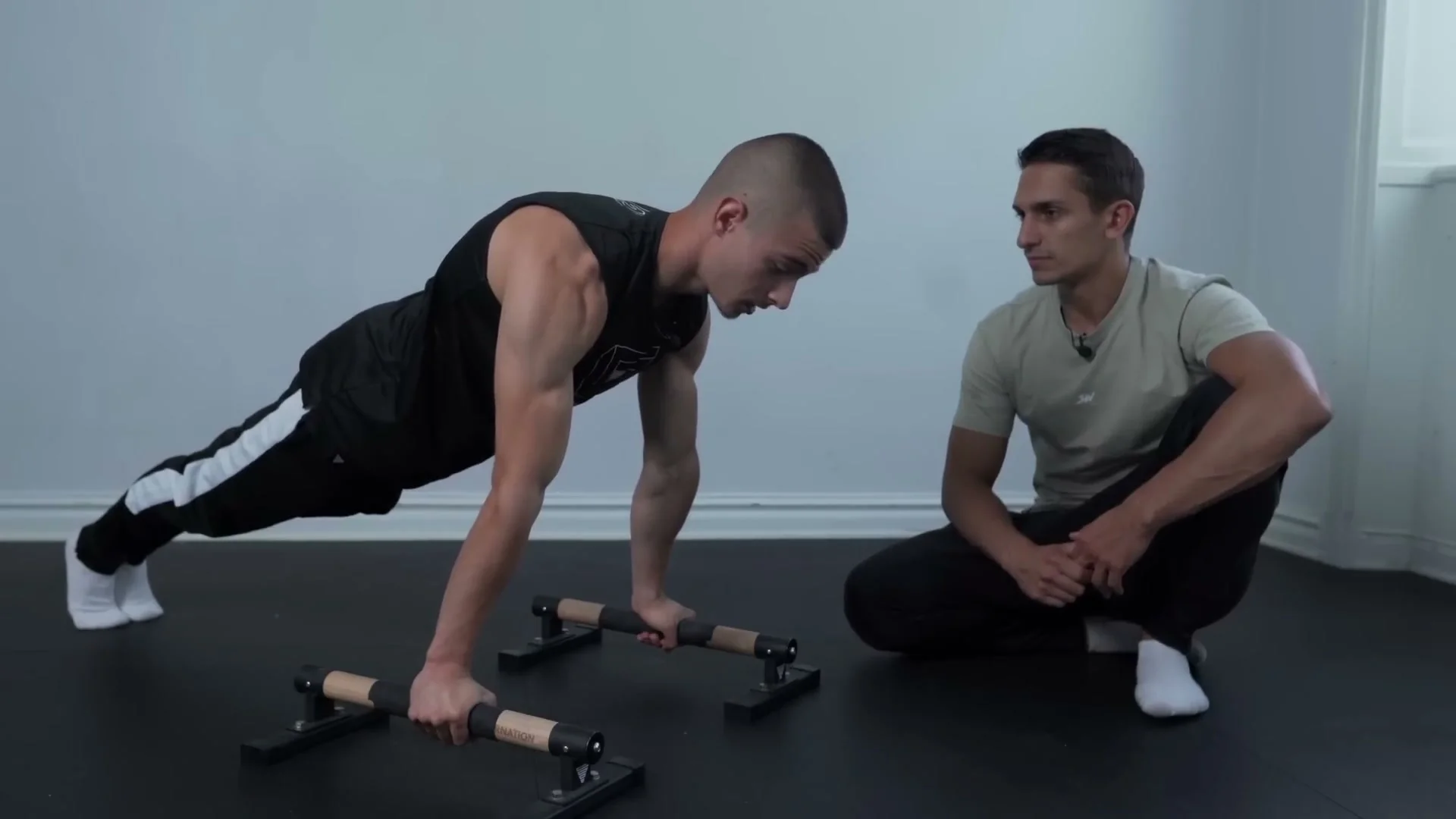
The first exercise is push-ups on parallettes. This sounds basic, and it is. Hristov is clear that without the push-up strength, nothing that follows is accessible. The push-up here is not just a strength exercise. It trains the exact body position and elbow alignment that carries through every planche variation.
The form cues: maintain a straight line from head to feet throughout. Lock the elbows and turn the biceps to face forward. The elbows should not flare out to the sides. The wrist stays in the neutral middle position. Lower slowly and press back up under control. Add scapula protraction at the bottom of each rep: let the shoulder blades spread apart and push slightly further away from the floor at the end of the push.
Key Takeaway
Exercise 2: Protraction and Retraction Push-Ups
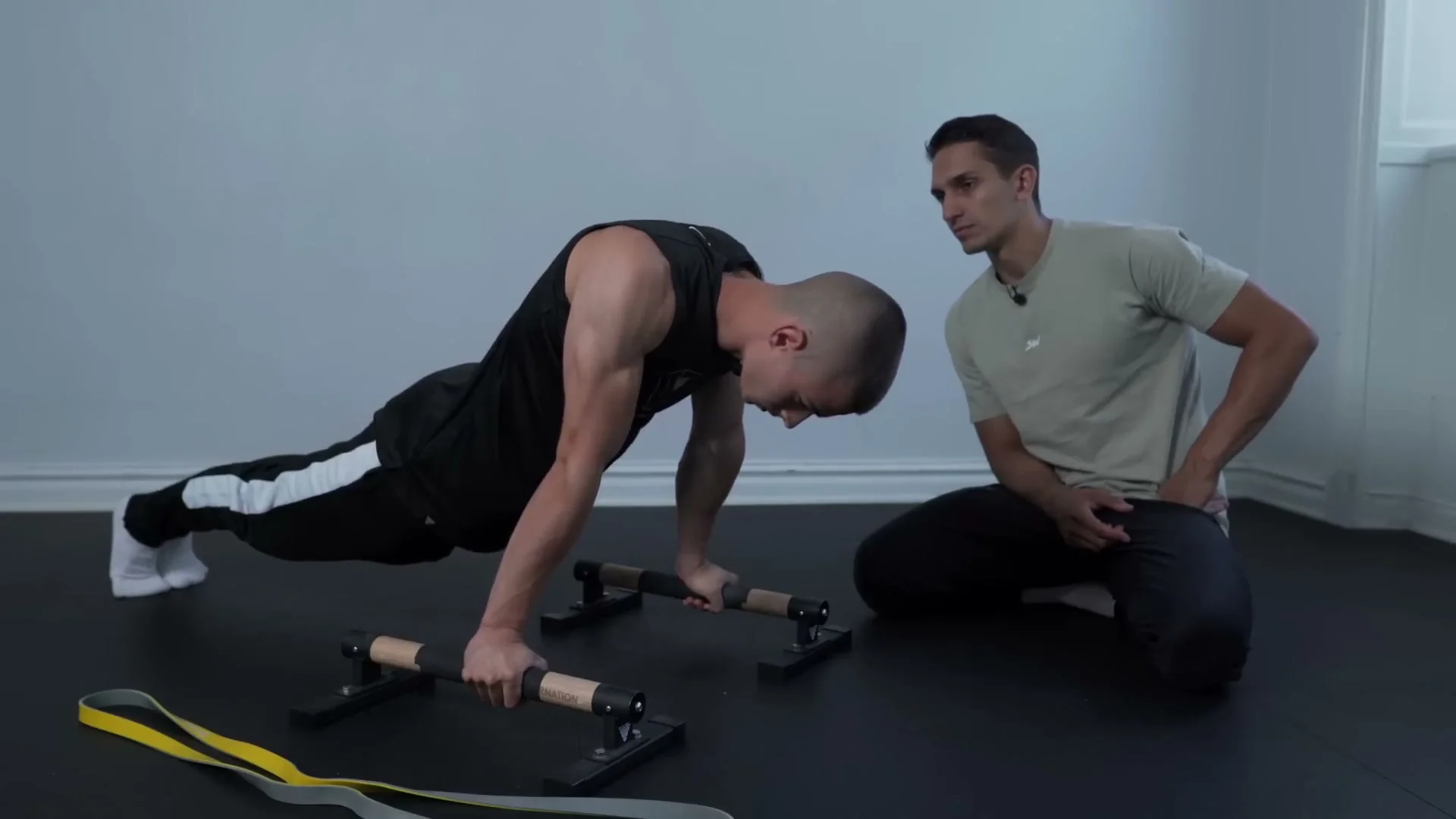
The second exercise focuses specifically on the scapula. Starting in the same push-up position, the movement is not a traditional push-up. Instead, alternate between protraction and retraction: push the scapula apart and forward on protraction, then pull the shoulder blades together and back on retraction. The hips stay down throughout. Only the upper back and scapula move. The body does not dip or rise significantly.
This exercise trains the scapula control that drives the planche lean and the planche hold. The scapula protraction in the planche position is what keeps the shoulders elevated and the body from sinking. Developing that control in isolation before adding load makes it accessible under the harder exercises.
If this becomes too easy, add a resistance band looped across the back to increase the load on protraction. Hristov demonstrated this in the video and confirmed it as a valid progression tool.
Exercise 3: Planche Lean
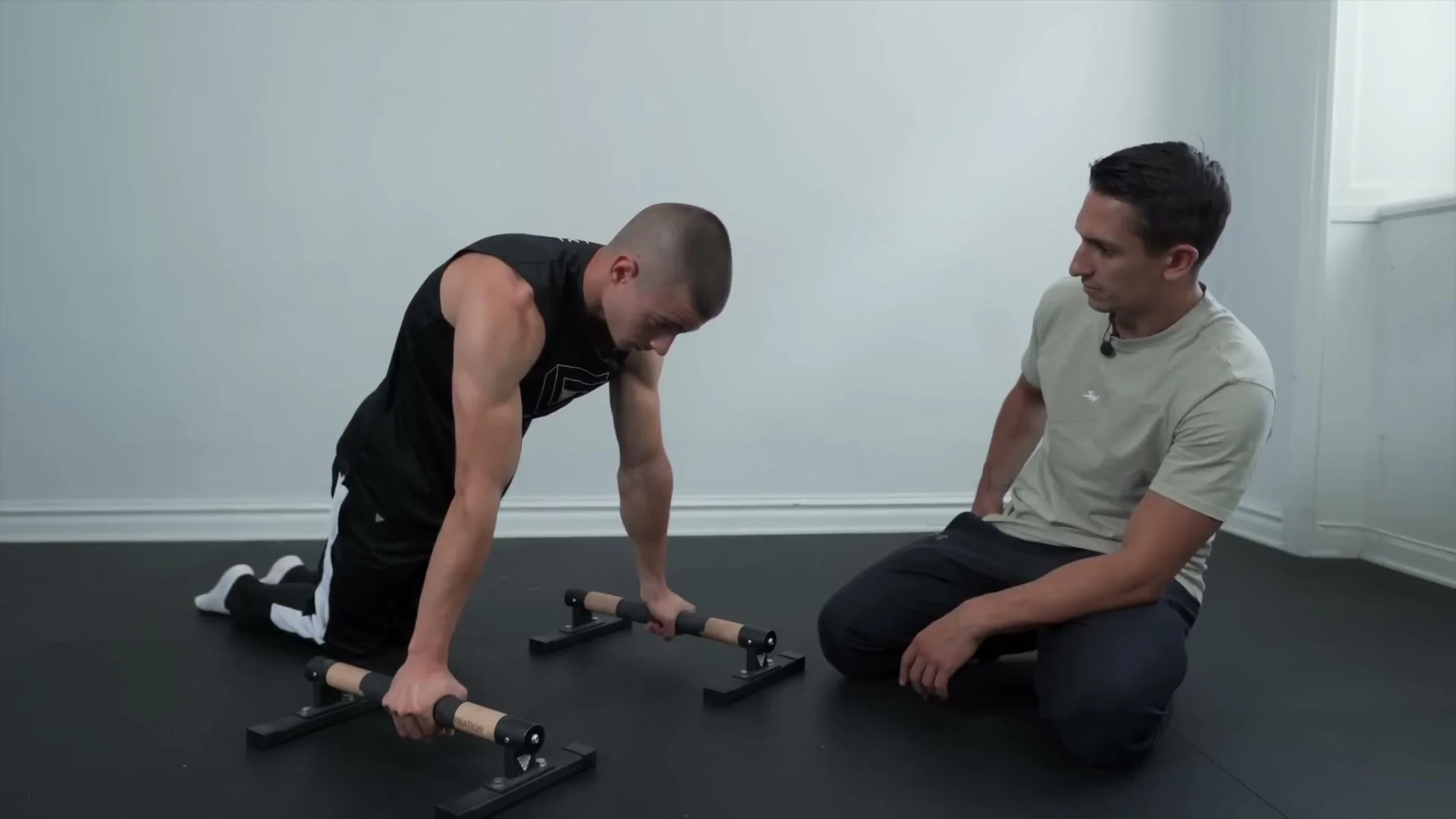
The planche lean is the bridge between push-up strength and actual planche. From the push-up starting position, lean the body forward past the hands. Start with a small lean and increase the forward position over time.
The cues: protraction on the way forward, hip down, straight legs throughout. Slide the body forward without letting the hips rise. The critical point Hristov makes: the feet must stay on the floor. Lifting the feet to make the position easier is not the same exercise. The feet on the floor and the body leaning forward creates the load specific to the planche. Lifting the feet changes the leverage and the training stimulus.
Hold the lean position for time. Start with what is manageable and build the duration progressively. Hristov calls this the hardest of the five exercises for most beginners, and that matches his assessment of where most people stall on the planche journey.
Exercise 4: Lean Push-Ups
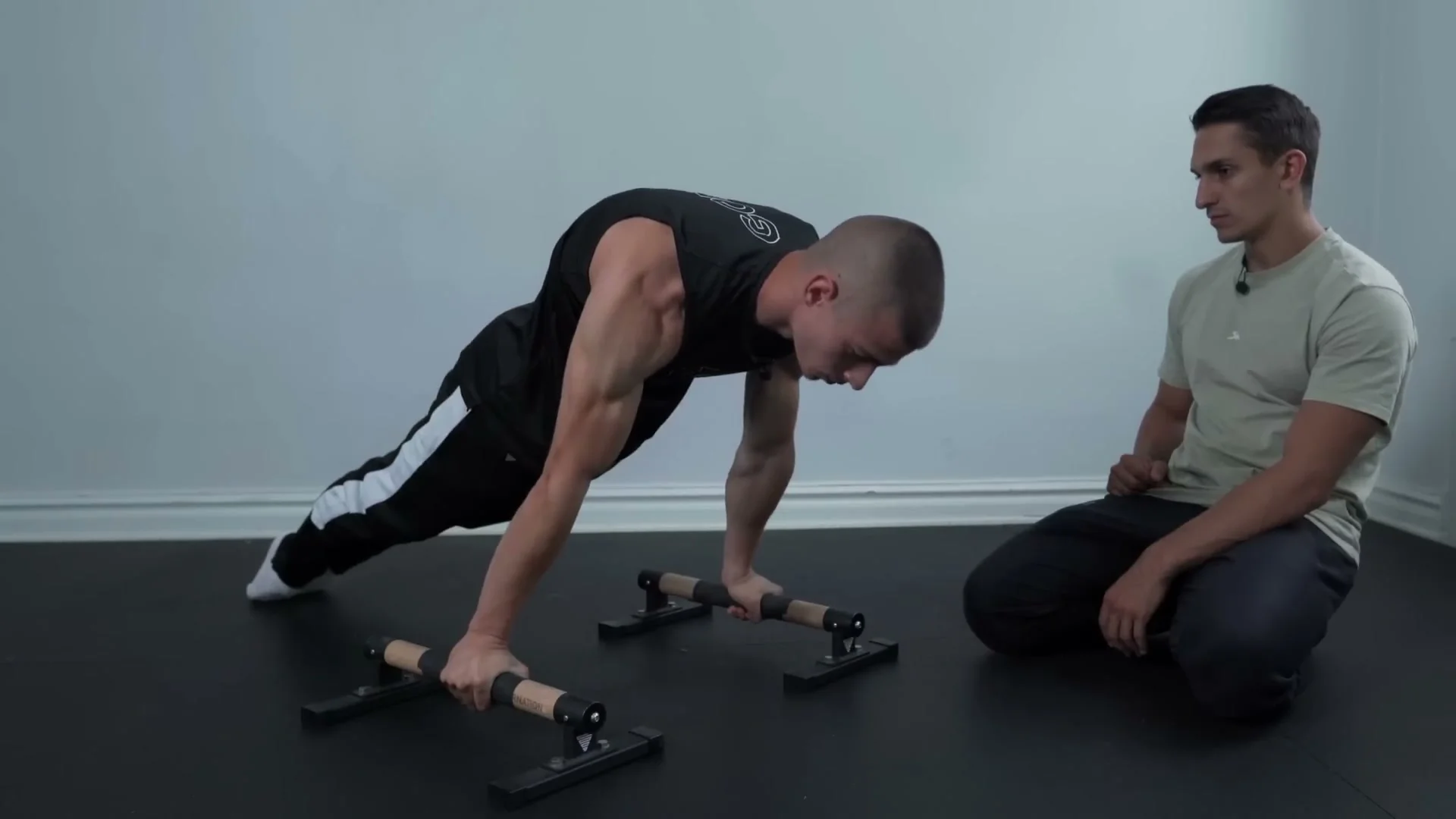
Exercise four combines the push-up from exercise one with the planche lean from exercise three. Start in the lean position. Maintain the lean and the hip-down position while performing a push-up. Return to the lean position. Maintain throughout, not just at the top.
This exercise is brutal. Hristov says he finds lean push-ups harder than full planche, which is revealing. The reason is that the lean hold requires full activation throughout the full range of the push-up, with no opportunity to reset. Hristov confirmed this after attempting it with feet flat rather than elevated: the flat-feet version made it even harder and exposed exactly why the lean position matters.
If the lean is consistently lost during the push-up, return to exercise three and build more lean hold endurance before adding the push-up.
Exercise 5: Tuck Planche
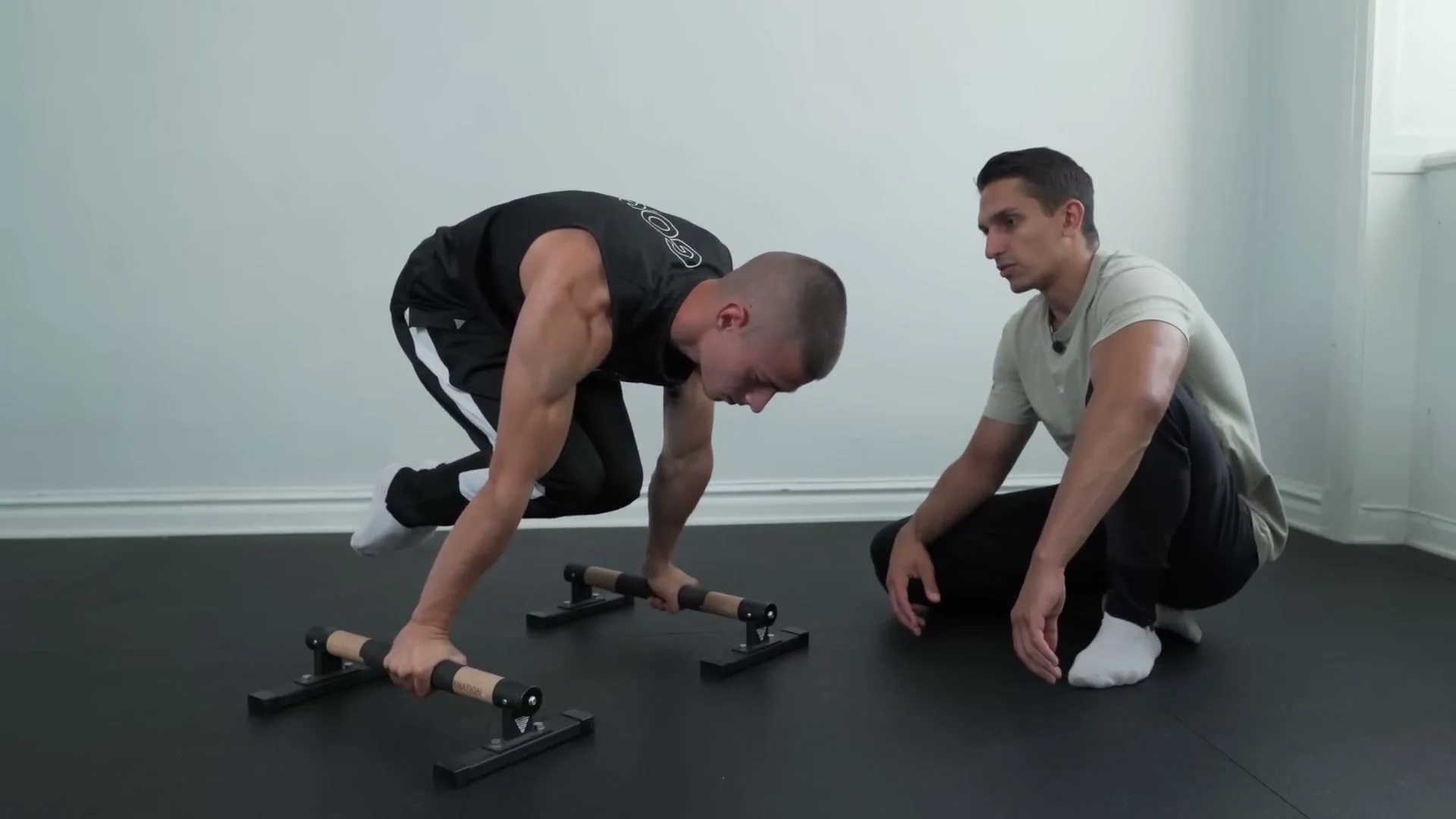
The fifth exercise is the tuck planche: the first position where the feet leave the floor. From the lean position, tuck the knees to the abs and hold. The elbows stay locked. The biceps face forward. The wrist remains in the neutral middle position. Protraction is active throughout.
Hristov adds one specific cue: breathe. Not as an afterthought, but as a trained habit from the first attempt. Athletes who hold their breath during tuck planche training have to unlearn it later, which costs time. Establish normal breathing in the hold from the start.
On the biceps position: it is acceptable if the biceps cannot fully face forward in early attempts. The goal is to progress toward a fully forward biceps position over time, which requires shoulder flexibility that develops with training. A partially forward position is fine for starting. A biceps position that faces inward toward the body creates shoulder strain and should be corrected.
Training Tips
Work through the exercises in order. The strength from exercise one is a prerequisite for exercise three. The scapula control from exercise two makes exercise five possible. Do not skip to exercise four or five before one through three are solid.
The planche lean is harder than it looks. Most beginners underestimate it on the first session and overestimate their progress after one week. The lean tolerance builds slowly. Consistent sessions over months, not weeks, is what makes it accessible.
Do not use the feet-up version of the planche lean. It is a different exercise with a different training effect. Keep the feet on the floor.
Parallettes matter. Floor planche training adds wrist discomfort that cuts sessions short and accumulates injury risk. If one thing is worth investing in for planche training, it is parallettes.
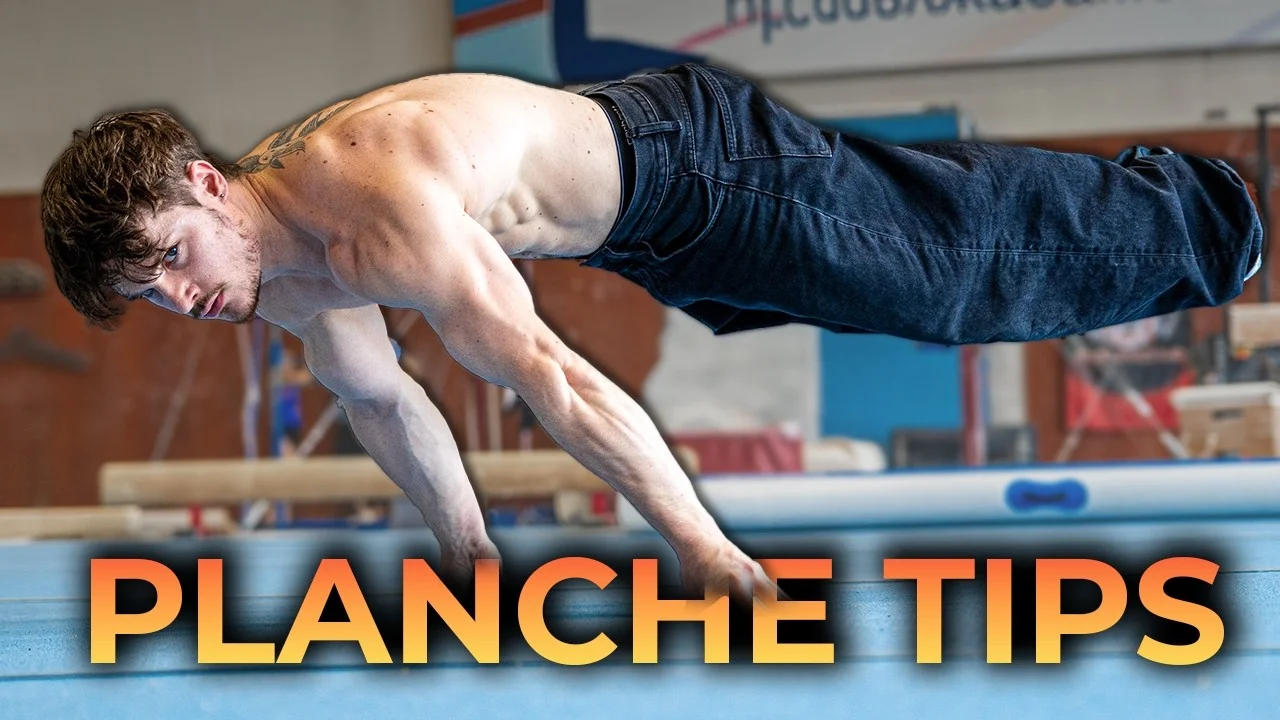
The planche journey is individual. Hristov says this directly at the end of the video: the timeline is different for every person. Some athletes need two years. Some need five. The process is what is consistent, not the timeline. For more advanced technique once these basics are in place, see the planche tips and tutorial.
Frequently Asked Questions About the Planche
Can a total beginner start learning planche?
Yes, but only with the correct foundation. These five exercises are specifically designed for total beginners. The key is not attempting advanced positions before the basics are in place. Push-ups, leans, and scapula control are the starting point, not tuck planche.
Why are parallettes important for planche training?
Parallettes allow a neutral wrist position, which reduces strain and discomfort during the extended holds and loading that planche training requires. On the floor, the wrists are in full extension throughout, which adds injury risk and limits the wrist flexibility needed for the forward lean. Parallettes remove that limitation from the start.
What is protraction and why does it matter for planche?
Protraction is the forward movement of the shoulder blades: the scapula spread apart and push away from each other. In the planche position, active protraction is what elevates the shoulders and holds the body horizontal. Without it, the shoulders drop and the body sinks. Exercise two trains this scapula movement in isolation before it is needed under full load.
Are lean push-ups harder than a full planche?
According to Daniel Hristov, yes, lean push-ups are harder for him than a full planche. The lean push-up requires maintaining a full forward lean position through the entire range of a push-up, with no reset between reps. Full planche is a static hold with no dynamic component. This makes lean push-ups a uniquely difficult exercise even for advanced athletes.
What does "biceps looking forward" mean in the cues?
It means the bicep muscle (and the crease of the elbow) faces forward, not outward or inward. Elbows point backward, arms are straight, and the biceps face in the direction of the movement. This position aligns the shoulder joint correctly for planche loading and sets the wrist grip in the neutral middle position Hristov recommends.
How long does it take to learn the planche?
Hristov is direct: the timeline is different for every person. Two years is common for dedicated athletes. Five or more years is realistic for some. The timeline depends on starting strength, shoulder flexibility, training frequency, and body proportions. Following the correct exercises consistently is more important than the timeline.
Can I do these exercises without parallettes?
The exercises can be attempted on the floor, but it is not recommended for regular training. Floor planche work forces the wrists into full extension, which adds discomfort and injury risk, especially in early training. Hristov specifically recommends parallettes as the first purchase for anyone starting planche training.
Daniel Flefil
Calisthenics coach with 11 years of experience, co-founder of Calixpert, and organizer of Beast of the Barz, one of the world's largest calisthenics competitions. Based in Stockholm. I write about training, equipment, and everything that goes into building a serious calisthenics practice.
More about Daniel →