
Daniel Flefil
September 8, 2019 · 8 min read
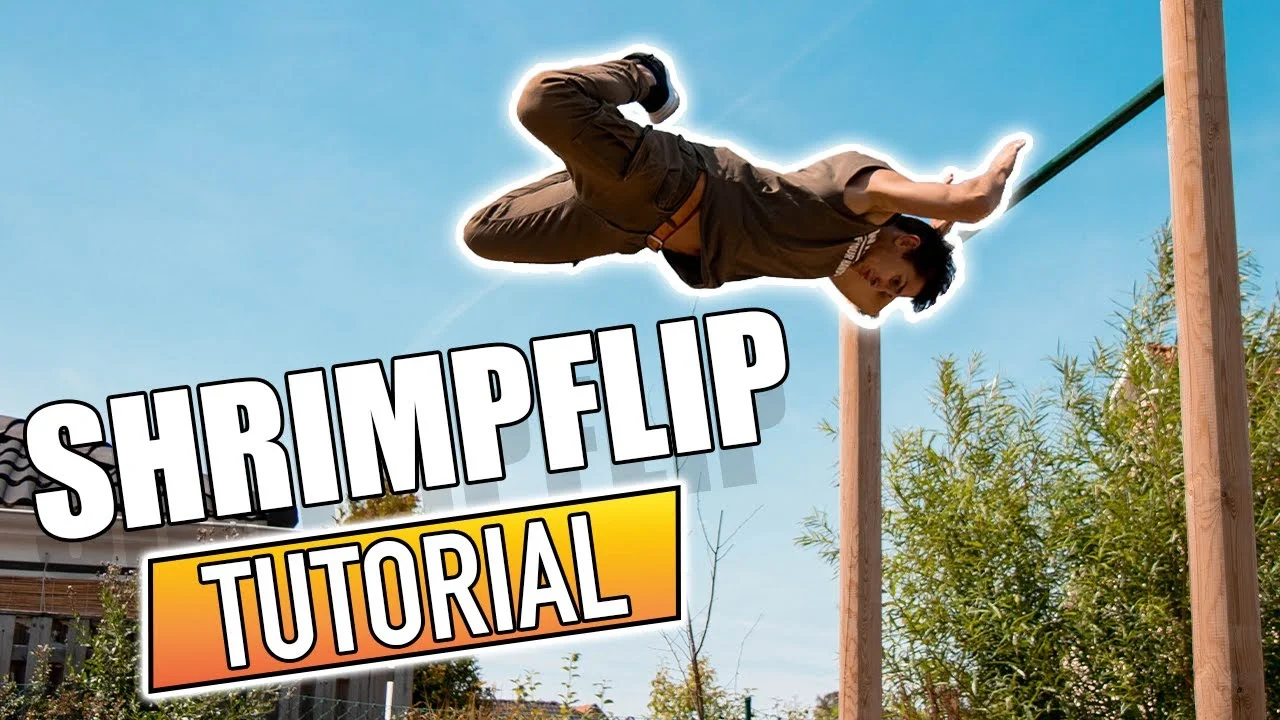
The shrimp flip is a bar re-catch move where you jump to the bar, invert your body, kick out to the sky, and re-grab the bar behind your head. It is also called the skin the catch by some athletes. The move requires shoulder and lower back flexibility to pass the bar cleanly with your feet and body, and a specific kick pattern that involves the whole body rather than just the legs. Mentally, the inversion makes it feel harder than it is. In this tutorial I cover the prerequisites, the six progression steps, and the arm path drill that makes the re-catch possible. By the end, you will have a structured approach to train it however many attempts it takes.
Watch the Full Tutorial
What Is the Shrimp Flip?
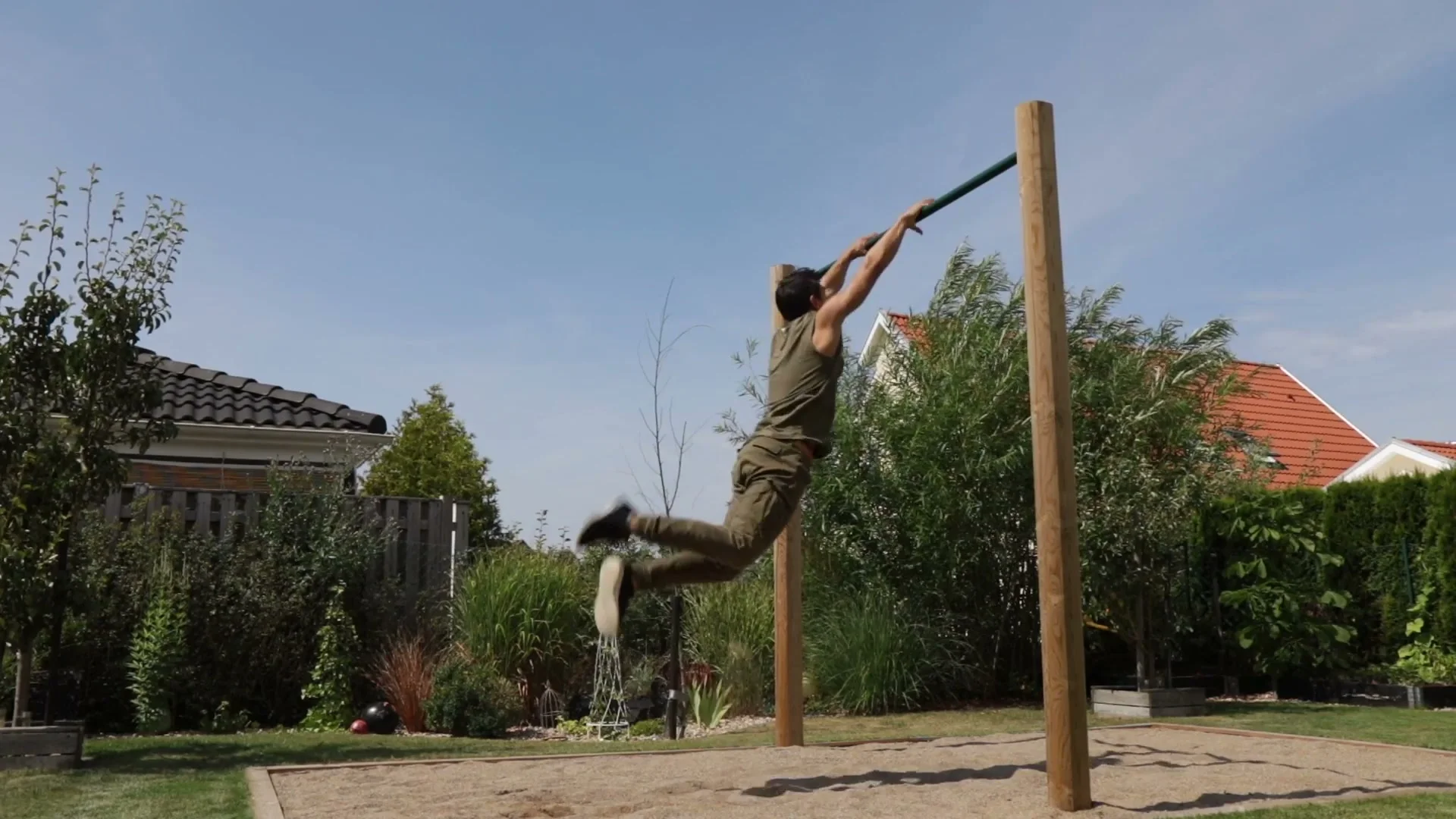
The shrimp flip is a dynamic bar re-catch where the athlete jumps forward to the bar, tucks into an inverted position, passes the bar with the feet and hips, kicks out explosively with the whole body, releases the bar, and re-catches it behind the head as the body rises. When done correctly, the athlete lands back on the bar or stands one step behind the starting position.
It is sometimes called skin the catch because it combines the skin the cat inversion pattern with a re-catch from a release. In street workout freestyle it appears as a standalone skill and as part of inverted bar combinations. The difficulty is moderate. The strength requirement is lower than moves like the swing 360, but the coordination and comfort in the inverted position take time to build.
The movement trains shoulder mobility, inverted body control, and explosive full-body extension. Athletes who struggle with it typically have limited flexibility in the shoulders or lower back, which prevents a clean pass of the bar, or they kick with only the legs rather than the whole body. If you are hitting specific problems, the shrimp flip problem exercises guide addresses the two most common sticking points.
Prerequisites
The shrimp flip requires flexibility in the shoulders and lower back to pass the bar cleanly with the feet and body while hanging. Without this mobility, the feet cannot get past the bar and the rest of the progression is inaccessible. If the skin the cat position is difficult because the feet cannot pass the bar or the shoulders feel blocked, the flexibility requirement needs work before training the shrimp flip.
A comfortable skin the cat is the primary standard before starting. Skin the cat slow is the first step of the progression itself, so if it is not yet achievable, that is where the training begins.
Specific standards before starting:
- Skin the cat with arms straight and legs together (slow, controlled)
- Comfortable inverted hang for 5 seconds
- Basic shoulder and lower back flexibility to bring feet past the bar
Technique: Key Cues for the Shrimp Flip
Three technique cues define the shrimp flip.
The first is the jump approach. Do not stand directly under the bar before jumping. Take a step back from below the bar, then jump forward and up toward it. The upper body goes forward first and the legs hang slightly behind. This creates a natural swing with the legs as you grab the bar, which is the momentum needed before going into the inversion and kick.
The second is the kick. The kick is not a leg kick. It is a whole-body extension: feet, knees, and hips all extending at the same moment. Think of it as an upside-down deadlift. Aim your heels toward the sky. If the hips do not extend and only the feet and knees kick, the body does not get enough height for the re-catch.
The third is the arm path. When releasing the bar to re-catch, the arms do not go wide. The path is specific: drag the fingers from the lower back upward to the armpits, then behind the ears, then over the head to reach the bar. Both hands re-catch simultaneously. A wide arm swing makes the reach longer and less controlled. The behind-the-ear path is shorter and more reliable.
Progression: Training From Zero to Shrimp Flip
Stage 1: Skin the Cat, Slow, Then Fast
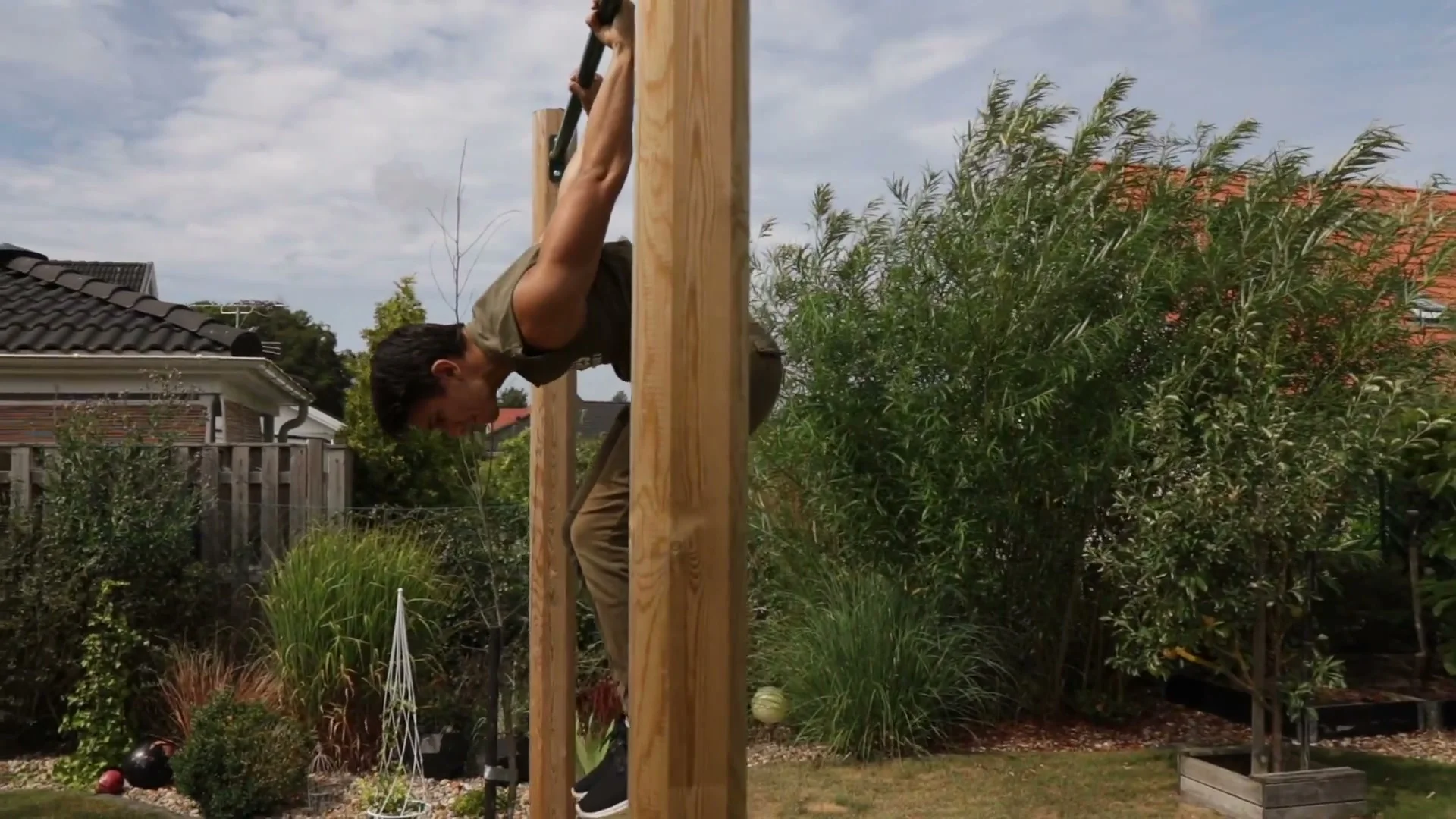
Start with the skin the cat performed slowly. Arms straight, legs together. Move through the inversion at a pace where you have full control at every point. If any part of the movement feels stuck or uncomfortable, that is where the flexibility work is needed before moving forward.
Once the slow version is comfortable and consistent, perform it with more speed. The fast version should still be controlled. The speed builds the body's comfort with the inversion at a pace that approaches what the shrimp flip requires. Three clean controlled reps in each direction is the standard before moving to the next stage.
Key Takeaway
Stage 2: Skin the Cat Release
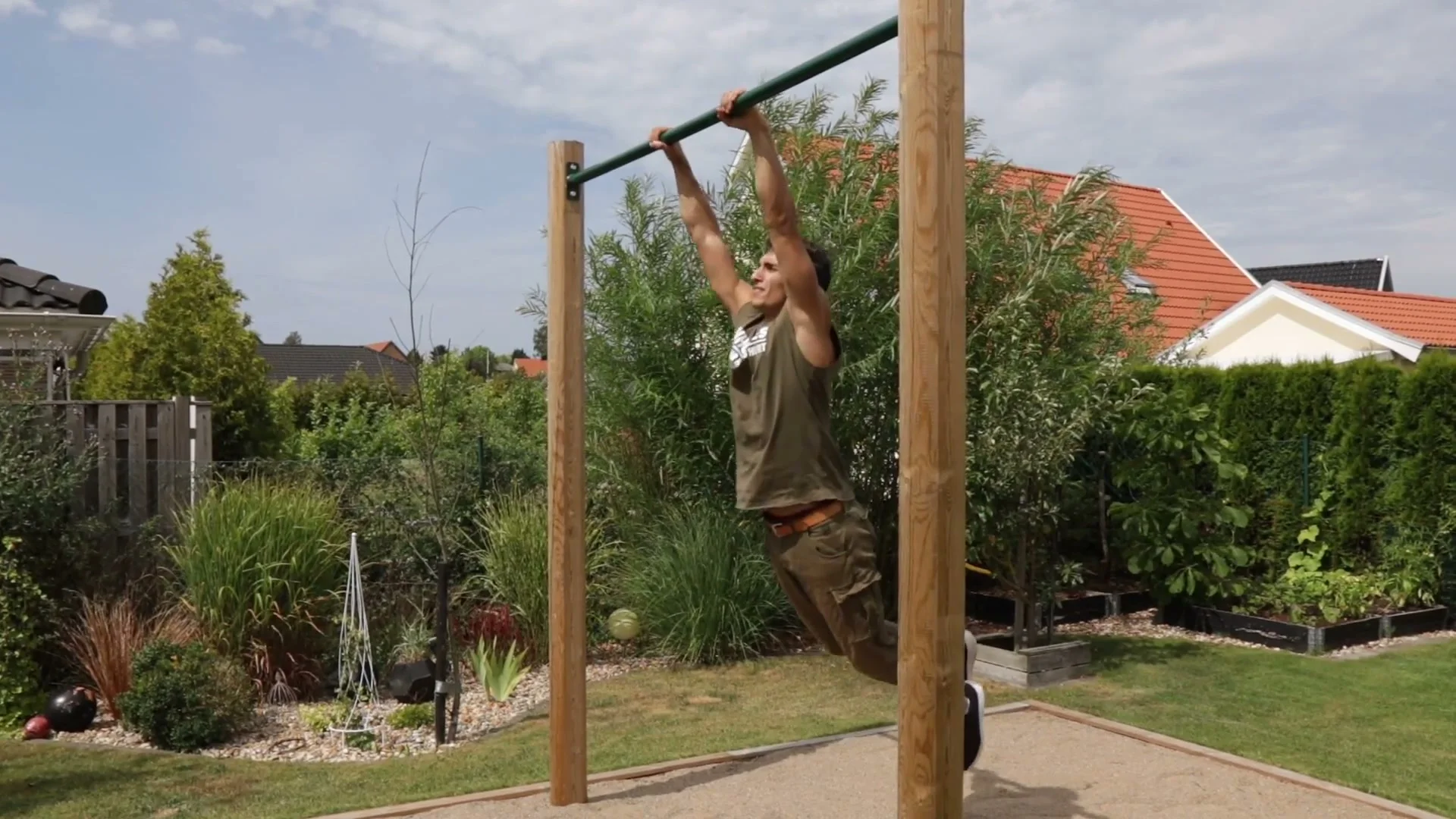
Take a small swing, perform the skin the cat, and when the feet and hips have passed the bar, release the bar and land on your feet behind it. Do not try to re-catch the bar yet. The goal is to land standing, one step behind the bar.
This step is a confidence drill. Being upside down and releasing deliberately is the moment most people fear. The fear is normal. Working through this stage repeatedly builds the understanding that releasing from the inverted position results in a controlled foot landing, not a head landing. Spend significant time here. It is the foundation everything else builds on.
Stage 3: Jump Approach
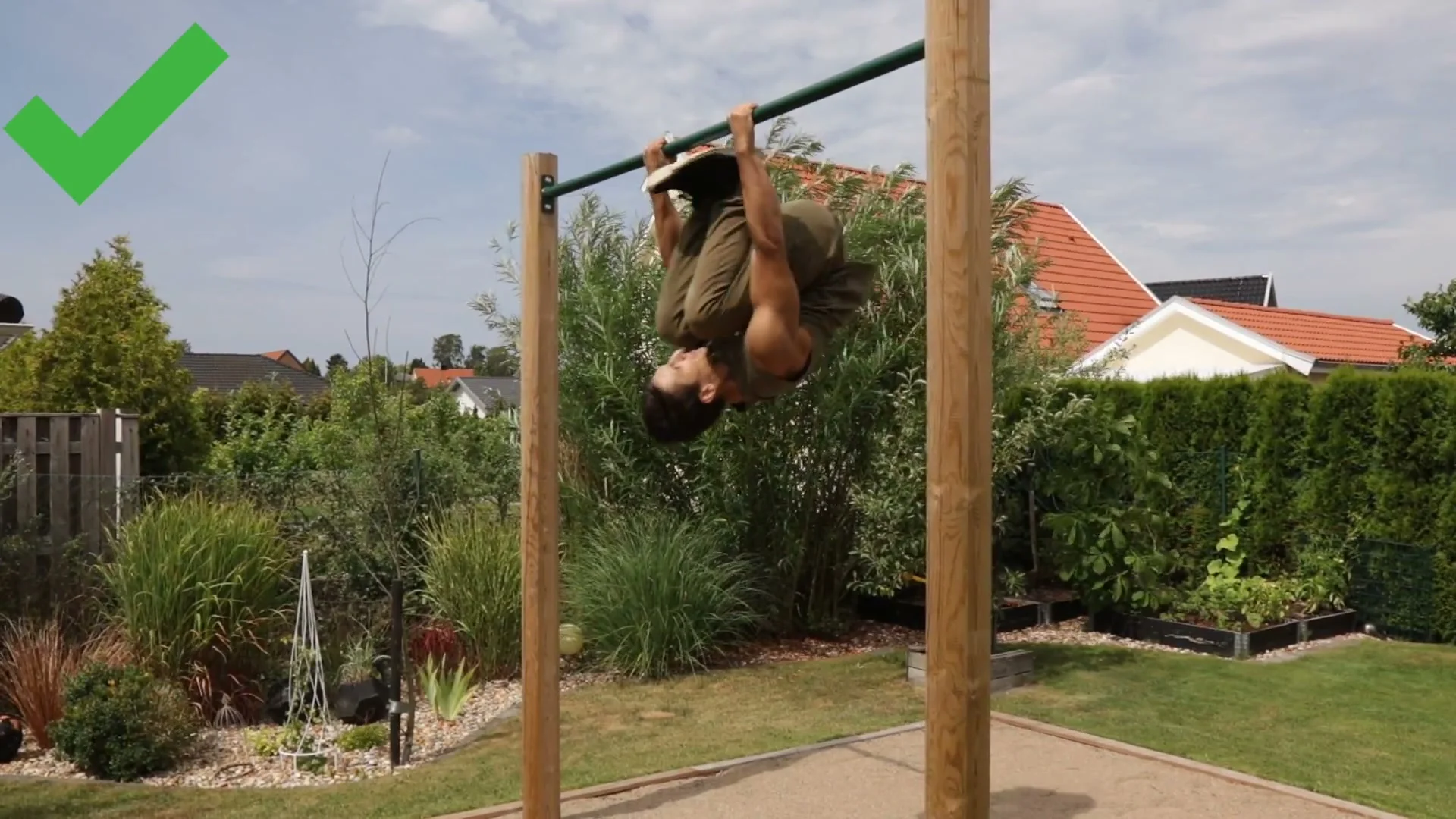
Practice the jump approach before any kick or release is attempted. Stand one step back from directly under the bar. Jump forward and up. Upper body goes first, legs swing behind. Feel the natural pendulum the legs create as you grab the bar.
Compare this to jumping from directly below the bar. When you jump straight up with no forward momentum, the legs do not swing and there is no pendulum. The swing is what the tuck and kick require. Without it, the kick has no momentum to build on.
Stage 4: Kick-Out Drill
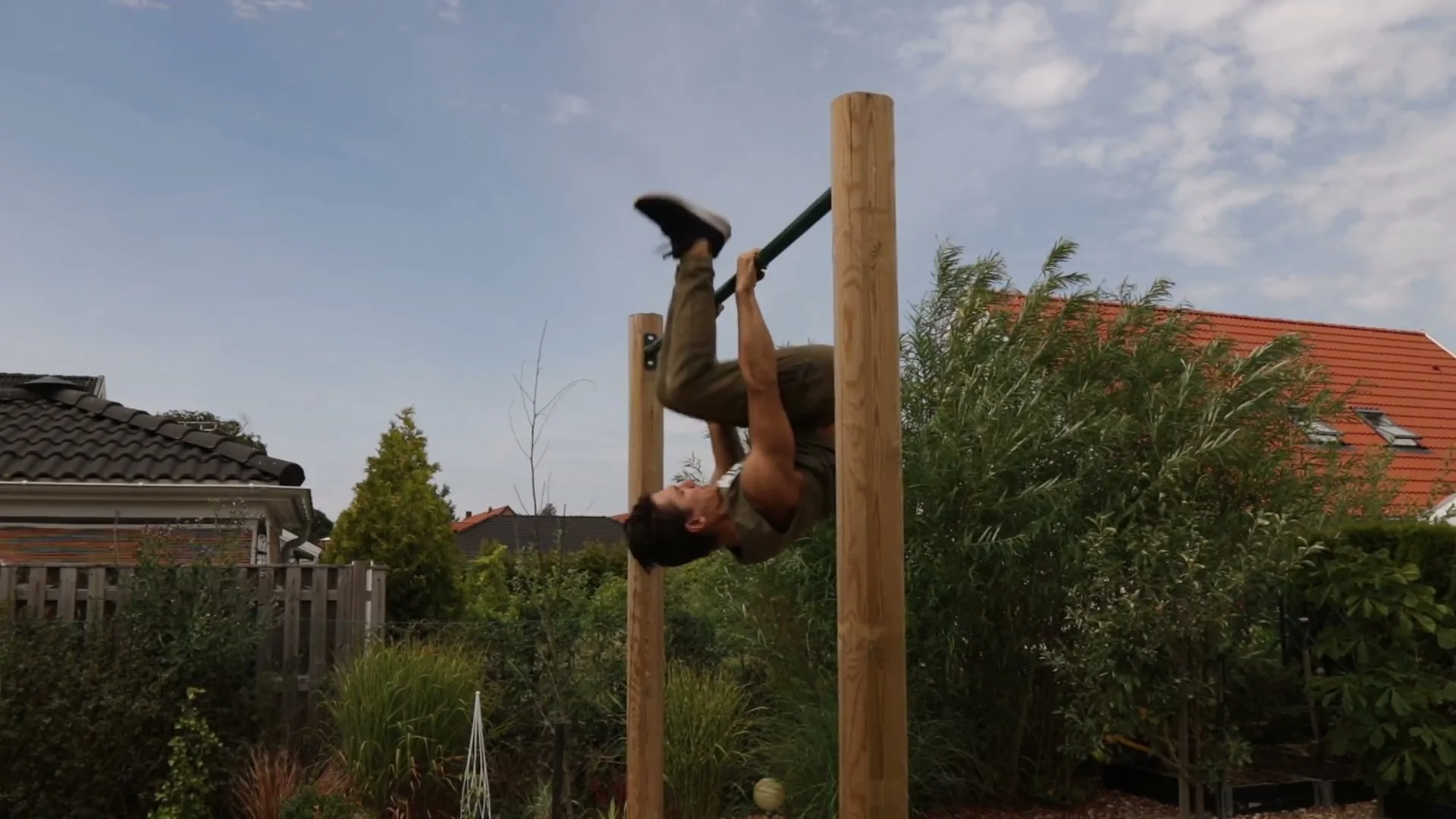
Hang from the bar in a tuck position. Kick out with feet, knees, and hips simultaneously. Aim your heels toward the sky. Straighten the whole body in one motion. Then tuck back in. Repeat.
This drill isolates the kick pattern and builds it as a single coordinated motion before it needs to combine with the release. The common error is kicking with only the feet and knees and letting the hips stay bent. When the hips do not extend, the body does not get vertical, the height is lost, and the release produces no air time. The hip extension is the part most people miss.
Stage 5: Three-Step Kick and Land
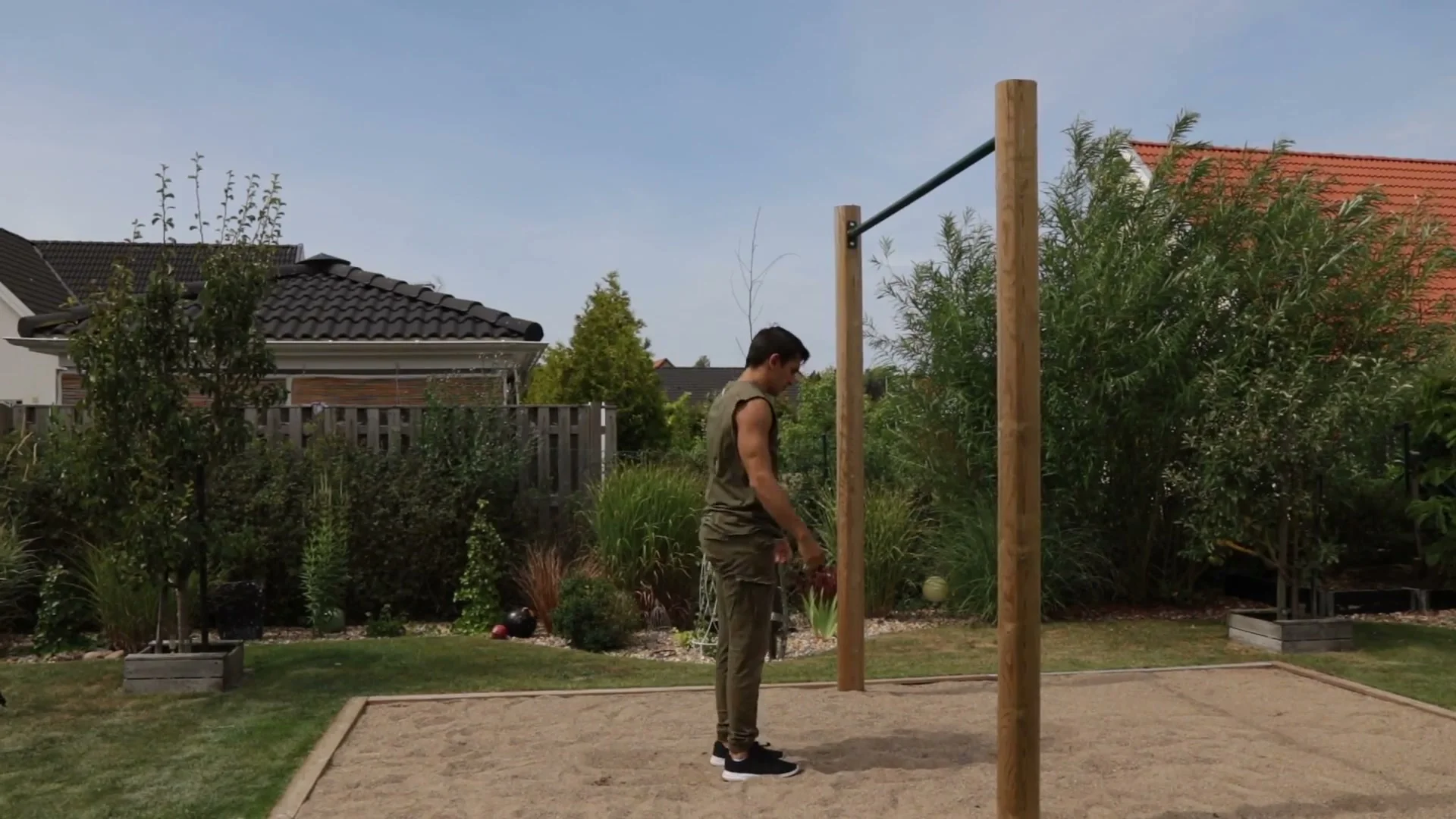
Jump to the bar, tuck, perform the kick-out twice without releasing. On the third kick, kick out fully, pull slightly with the arms at the same time, and release the bar. Land on your feet behind the bar. Do not attempt the re-catch yet.
The arm pull on the release gives extra height. The goal is to land standing one step behind the bar after the third kick. When this is consistent, the height and timing of the release are correct and the re-catch becomes the next addition.
Stage 6: Arm Path Drill and Full Re-Catch
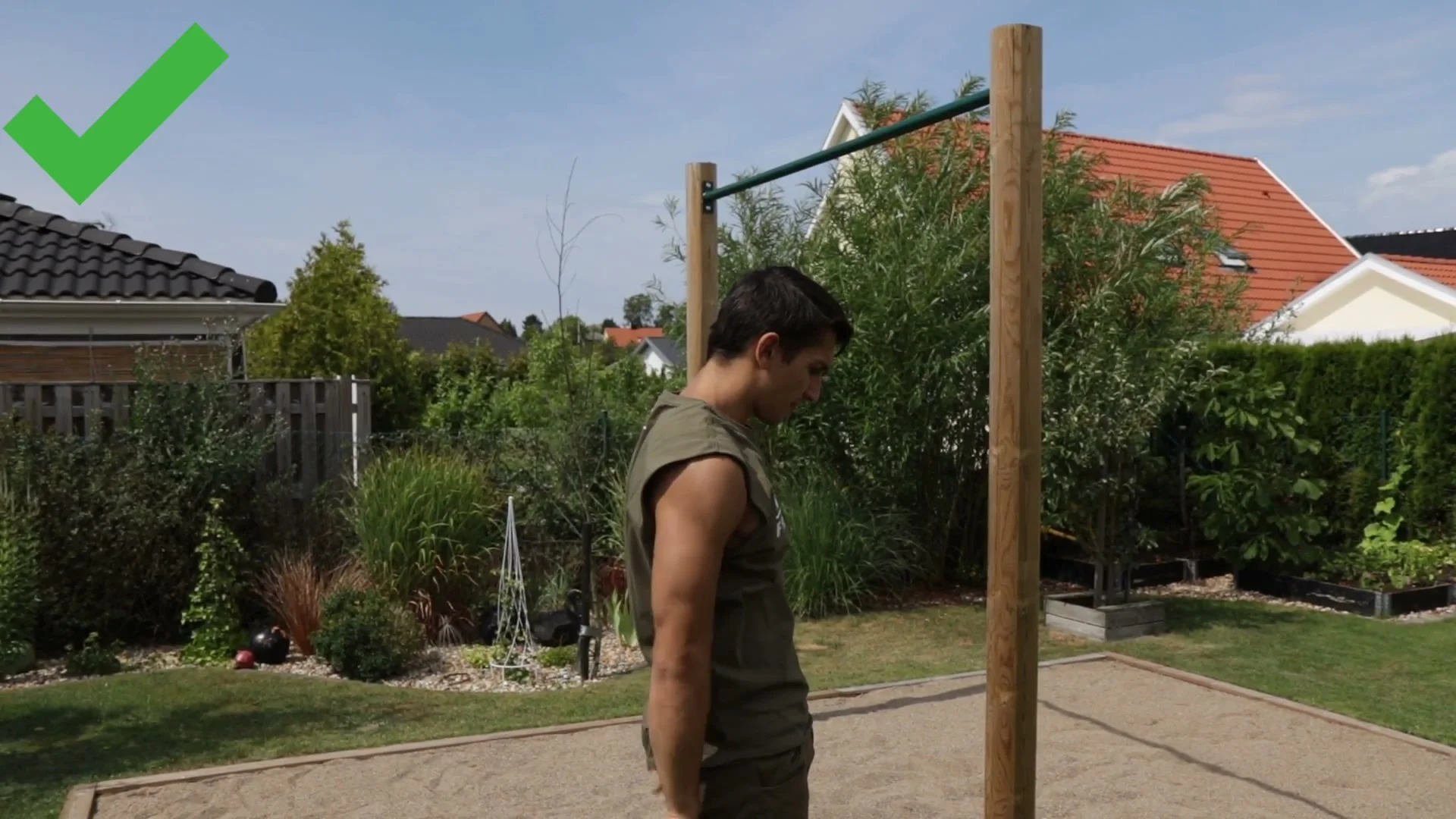
Practice the arm path standing on the ground before attempting the re-catch. Drag your fingers from the lower back to the armpits, then behind the ears, then over the head. Do this motion several times until it feels natural.
Now apply it to the bar. Jump, tuck, kick out on the first swing, pull slightly with the arms, release, and follow the arm path to re-catch the bar. Both hands reach the bar simultaneously. The first successful re-catch will not look clean. Keep working. The pattern develops with repetition. The goal throughout is to land one step behind the bar.
Common Mistakes
Kicking With Only the Feet and Knees
The most common mistake in the shrimp flip is not extending the hips during the kick. Only the feet and knees extending produces a partial kick that does not get the body vertical. The hips remain bent, no height is generated, and the release produces no usable air time. Think upside-down deadlift: every joint straightens at once.
Kicking Over the Bar
Trying to kick the legs over and past the bar in the direction of the bar (rather than straight up toward the sky) moves the body into a completely different rotation pattern. The kick should send the heels straight to the sky. If the kick goes past the bar, the release will not result in a foot landing.
Arms Too Wide on the Re-Catch
Reaching out to the sides to re-catch the bar adds unnecessary distance to the arm path and makes the timing unreliable. The arms go up and slightly back, not wide. Follow the lower back to armpit to ear path. Both hands reach the bar at the same time.
Standing Directly Under the Bar
Jumping straight up from directly below the bar produces no swing and no momentum for the tuck. The jump needs to be forward and up from one step back. The forward momentum creates the leg swing that the kick builds on.
Training Tips
Practice the shrimp flip when the shoulders are fully warmed up and mobile. The inverted position with the feet passing the bar places significant load on the shoulder joint in an extended position. Rushing into attempts without proper shoulder warmup increases the risk of strain.
Spend more time on stage 2 (skin the cat release) than it feels like you need. The confidence built from landing cleanly on the feet after releasing from the inversion is the foundation the re-catch requires. Athletes who skip past this stage often hesitate at the release point in later stages.
Record yourself from the side during the kick-out drill. The hip extension is invisible from the front and hard to feel in the moment. Video immediately shows whether the hips are extending with the feet and knees or staying bent while only the lower legs kick.
The full shrimp flip may take a large number of attempts before clicking. This is normal for this skill. The combination of flexibility, body control, timing, and confidence in the inversion is more complex than most beginner bar moves. Consistent, focused practice through the stages is the only path through it.
Frequently Asked Questions About the Shrimp Flip
What is the difference between a shrimp flip and a skin the cat?
The skin the cat is a controlled inversion on the bar where you rotate fully to the inverted position and return. The shrimp flip adds a kick-out from the inverted position, a bar release, and a re-catch. The skin the cat is both the prerequisite for and the first stage of learning the shrimp flip.
Do I need to be flexible to learn the shrimp flip?
Yes. Flexibility in the shoulders and lower back is required to pass the bar cleanly with the feet and hips. Without this mobility, the feet cannot get past the bar and the movement is blocked before the kick can happen. If the skin the cat is difficult due to tightness, shoulder and hip flexor mobility work needs to come first.
How many attempts does it take to learn the shrimp flip?
It varies widely between athletes. Some people get the first re-catch within a few sessions. Others take hundreds of attempts. The move has more steps to coordinate than most beginner bar skills, and confidence in the inversion takes time to build. Consistent practice through the stages is more reliable than attempting the full move repeatedly without the progression.
Can I do the shrimp flip on a standard pull-up bar?
Yes. Any bar with enough overhead clearance for the inversion works. A doorframe pull-up bar is not ideal because the close walls and low ceiling make the rotation tight. An outdoor calisthenics bar or a high bar on a rig provides the clearance the shrimp flip needs.
What does landing one step away from the bar mean?
When the shrimp flip releases and the body drops, the ideal landing spot is standing one step behind the bar, not directly below it. If you land directly below the bar, the kick did not generate enough height or was aimed too far over the bar. Landing one step back shows the kick direction and height were correct.
Is the shrimp flip dangerous?
The main risk is landing on the head or face during an incomplete rotation in the early stages. Stage 2 (skin the cat release) directly addresses this by building controlled foot landings before any kick is added. Working through the stages on a bar with soft ground or a mat underneath reduces the consequence of an imperfect landing significantly.
Daniel Flefil
Calisthenics coach with 11 years of experience, co-founder of Calixpert, and organizer of Beast of the Barz, one of the world's largest calisthenics competitions. Based in Stockholm. I write about training, equipment, and everything that goes into building a serious calisthenics practice.
More about Daniel →